Most facilities understand they need an NFPA 70B program. Fewer understand that the condition assessment is the engine behind it. Get the assessment right and everything else – maintenance intervals, documentation, your EMP – flows from it. Get it wrong and your whole program is built on a shaky foundation.
This guide covers how NFPA 70B condition assessments work, what the four ratings mean in practice, what factors drive them, and how to make sure your results land correctly in your Electrical Maintenance Program.
What Is an Equipment Condition Assessment Under NFPA 70B?
An Equipment Condition Assessment is a structured evaluation of an electrical asset, as defined by the NFPA 70B Standard for Electrical Equipment Maintenance,’s current state, performed by a qualified person. The assessment considers multiple factors (physical condition, operating environment, criticality, loading, age, and maintenance history) and produces a rating that directly determines how frequently that asset must be maintained.
This is a departure from how many facilities have historically managed electrical maintenance. Rather than maintaining everything on the same calendar schedule regardless of actual condition, the condition-based approach means equipment in good shape can have longer intervals while deteriorating equipment gets more frequent attention.
One rule governs the whole framework: the worst-rated factor sets the overall rating. One critical deficiency on an otherwise healthy asset moves the entire rating up. That’s what makes thorough, factor-by-factor assessment matter so much.
The Four Condition Ratings
Condition 1
Longest intervals
Condition 2
Reduced intervals
Condition 3
Short intervals + corrective action
Nonserviceable
Immediate action required
Condition 1: Good
Equipment rated Condition 1 has no deficiencies and operates within normal parameters. All physical, environmental, and operational factors meet expectations. These assets are eligible for the longest maintenance intervals, which vary by equipment type but can extend several years.
Condition 2: Fair
Condition 2 indicates minor deficiencies that do not immediately impair function but require monitoring and planned corrective action. The equipment works, but something (minor contamination, slight insulation degradation, a marginal connection) warrants closer attention. Intervals for Condition 2 equipment are shorter than Condition 1.
Condition 3: Poor
Condition 3 means significant deficiencies that materially reduce reliability. The equipment may still function, but it is at elevated failure risk. This rating triggers substantially shortened intervals and typically requires a corrective action plan with a defined completion timeline.
Nonserviceable
Nonserviceable equipment cannot perform its intended function and represents an immediate risk. This rating demands urgent action: repair, replacement, or decommissioning. It should trigger an immediate response, not a future scheduled event.
How Gimba Handles This
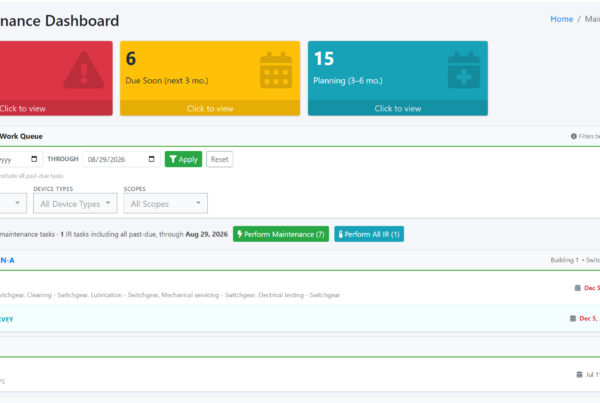
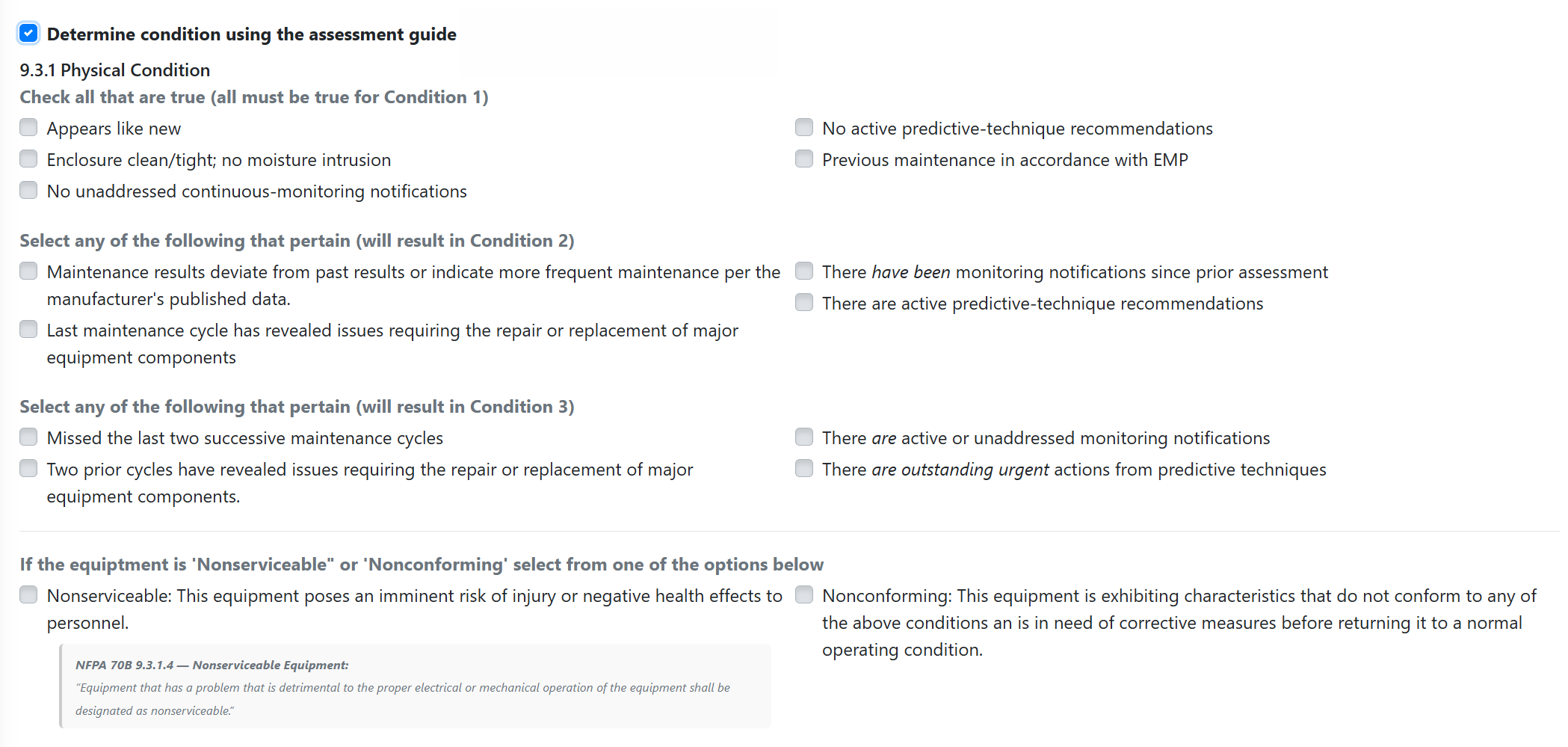
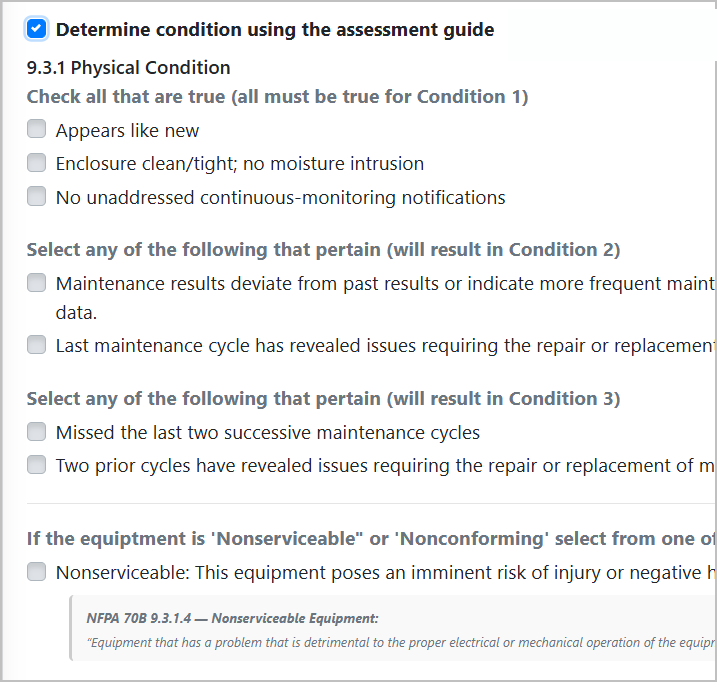
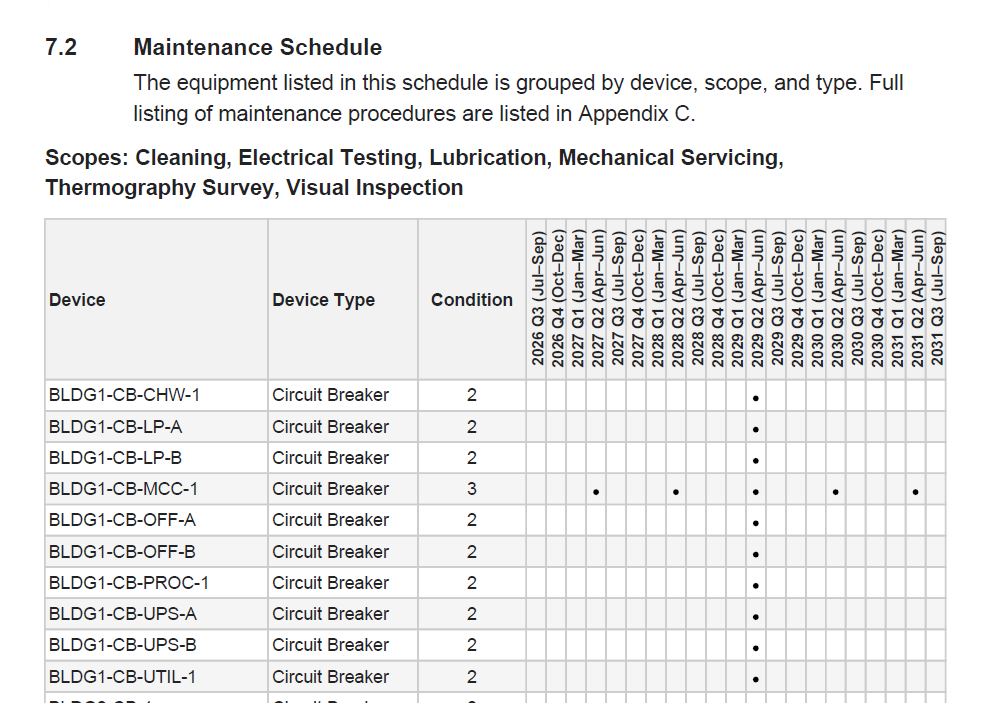
Your team doesn’t need to know NFPA 70B to run a compliant assessment. Gimba’s condition assessment guide walks technicians through every factor, question by question, for each device type. The platform determines the condition rating automatically based on the responses and sets the next maintenance interval without any manual calculation. No looking up interval tables. No risk of someone using the wrong schedule. The technician answers the questions – Gimba handles everything else.
Factors That Determine a Condition Rating
NFPA 70B specifies categories of factors that assessors must evaluate. Each factor is rated independently, and the worst single factor sets the overall rating for that asset.
- Physical condition: visible damage, corrosion, contamination, worn insulation, mechanical integrity of enclosures and connections
- Electrical condition: insulation resistance test results, contact resistance, thermographic findings, partial discharge indicators
- Operating environment: temperature extremes, humidity, chemical exposure, vibration
- Loading: whether the equipment operates within its rated capacity, and any overloading history
- Criticality: the consequence of failure for operations, personnel safety, and life-safety systems
- Maintenance history: whether prior schedule has been followed, outcomes of previous assessments
Step-by-Step: Conducting a Condition Assessment
Step 1: Gather baseline information. Before the physical assessment, collect nameplate data, installation date, maintenance history, and any prior assessment records. Knowing the asset’s rated parameters and history provides critical context for interpreting what you find.
Step 2: Visual inspection. Evaluate the physical condition of the enclosure, insulation, connections, and components. Document contamination, corrosion, physical damage, and signs of heat stress. Visual findings often reveal condition factors that electrical testing alone would miss.
Step 3: Thermographic scan. Infrared thermography identifies hot spots in connections and components, indicating resistance problems, overloading, or deteriorating contacts. NFPA 70B specifically calls out thermography as a key testing method.
Step 4: Electrical testing. Depending on equipment type and voltage rating, this may include insulation resistance testing, contact resistance, power factor testing, and for equipment above 1,000V, additional tests such as VLF or partial discharge monitoring.
Step 5: Evaluate operating factors. Assess environment, loading history, and criticality. These factors significantly affect overall risk but are not directly measured by physical inspection or testing.
Step 6: Assign ratings and the overall condition. Rate each factor independently, identify the worst-rated factor, and assign the overall condition rating accordingly.
Step 7: Document and set the next interval. Record all findings, test results, and the final rating. Determine the next maintenance interval based on the rating and equipment type, and enter it into your maintenance schedule.
How Gimba Handles This
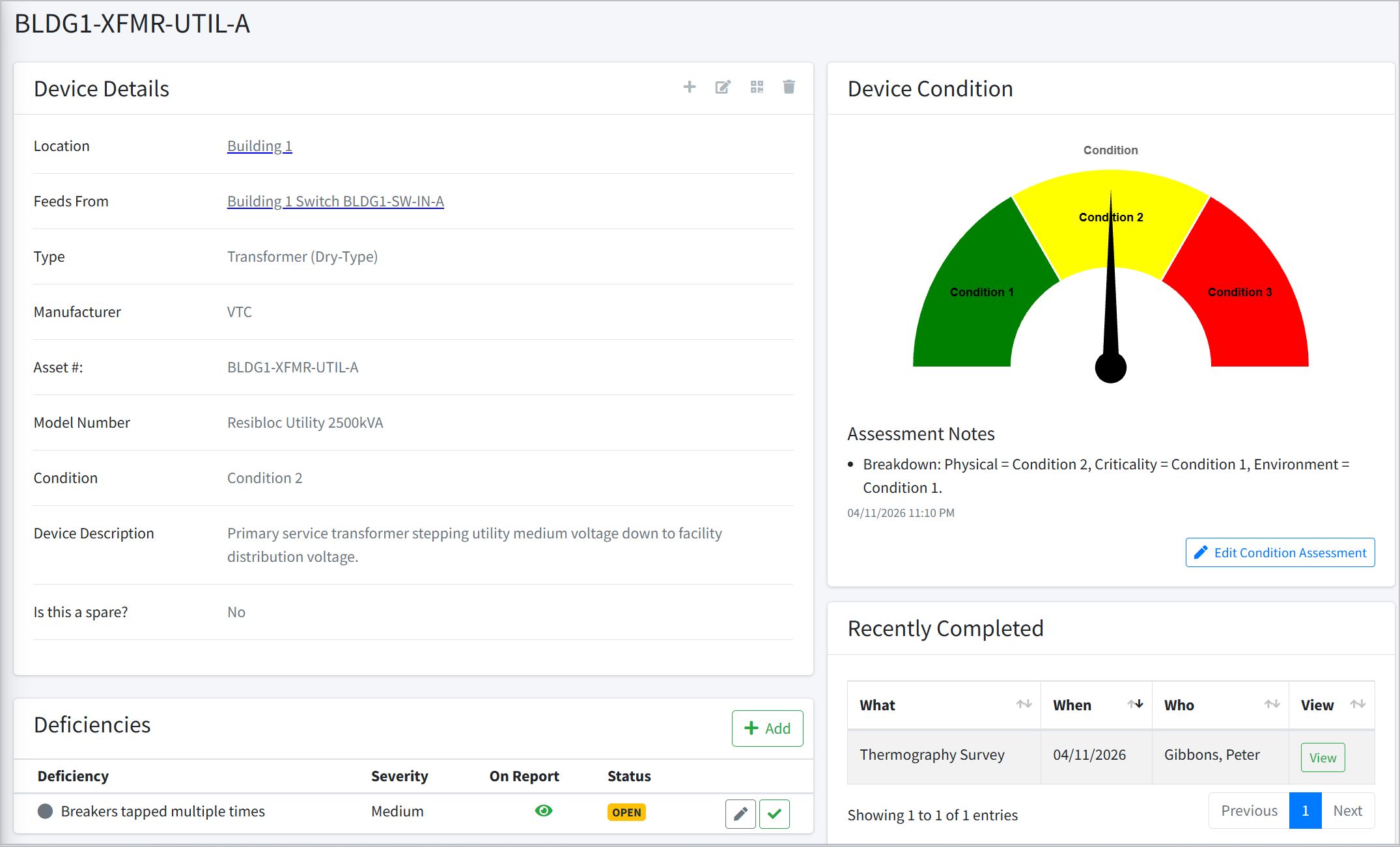
In Gimba, Step 7 happens automatically as part of the normal workflow. After the technician records their findings and assigns the condition rating, the system logs the completed assessment with timestamp and assessor identity, calculates the next interval based on device type and condition rating, and updates the maintenance schedule. The full documentation NFPA 70B requires is created as the work happens, not assembled after the fact.
Documentation Requirements
NFPA 70B requires that condition assessments be documented and retained as part of your EMP records. At minimum, records must capture:
- Date of the assessment
- Identity and qualifications of the assessor
- Equipment assessed (with unambiguous identification)
- Findings for each evaluated factor
- The assigned condition rating
- The resulting maintenance interval
- Any identified deficiencies and the corrective action plan
In practice, this documentation burden is a primary reason facilities turn to software. Managing assessment records across dozens or hundreds of assets in spreadsheets is time-consuming and fragile. Records get lost, formats vary across technicians, and producing a clean audit trail on demand becomes nearly impossible.
How Gimba Handles This
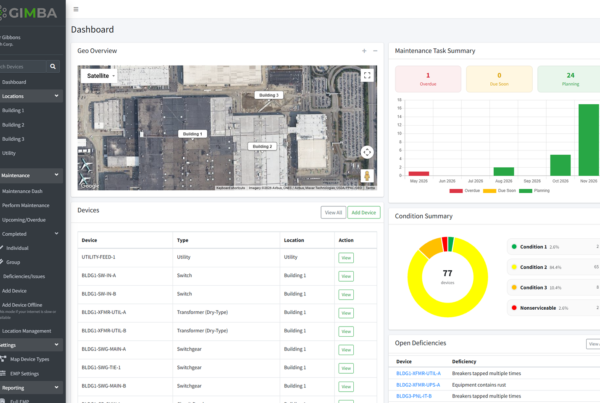
Gimba generates the complete audit trail NFPA 70B requires for every asset. Assessment date, assessor identity, equipment identification, factor-by-factor findings, condition rating, resulting interval, and corrective action notes are all captured and stored against each asset record. Pull an asset up and the entire assessment history is right there, formatted and re
ady for an auditor or insurer.
Let Gimba Handle the Assessment Process
Gimba guides your technicians through every NFPA 70B assessment criterion, auto-documents the results, and drives the maintenance schedule based on condition rating and device type. No 70B expertise required from your team.
Frequently Asked Questions
Who is qualified to perform a condition assessment under NFPA 70B?
NFPA 70B requires assessments be performed by a qualified person, meaning someone with the training and experience to evaluate electrical equipment safely and accurately. This does not necessarily mean a licensed engineer, but the assessor must have demonstrated competence with the specific equipment types being evaluated.
How often do condition assessments need to be repeated?
After each maintenance activity, a new assessment determines whether the rating has changed. Any significant event (an electrical fault, flooding, fire, or major operational change) should trigger reassessment regardless of schedule. See Chapter 9 for interval guidance by equipment type and condition rating.
Can assessments be performed on energized equipment?
Some activities (visual inspections, thermographic scans, certain monitoring) can be done on energized equipment with appropriate precautions. Others require de-energization. Any energized work must comply with OSHA electrical safety requirements and NFPA 70E standards, including arc flash PPE and documented safety planning.
Related reading: Chapter 9: Maintenance Intervals | Building Your EMP | NFPA 70B Compliance Software | Schedule a Demo | NFPA 70B Thermography Requirements | NFPA 70B Requirements Guide