

What Changed in 2023: Why It Matters for Contractors
NFPA 70B has been around since 1954. For most of that time it was a recommended practice. Facilities should have an electrical maintenance program. They should document their condition assessments. The word was always “should.”
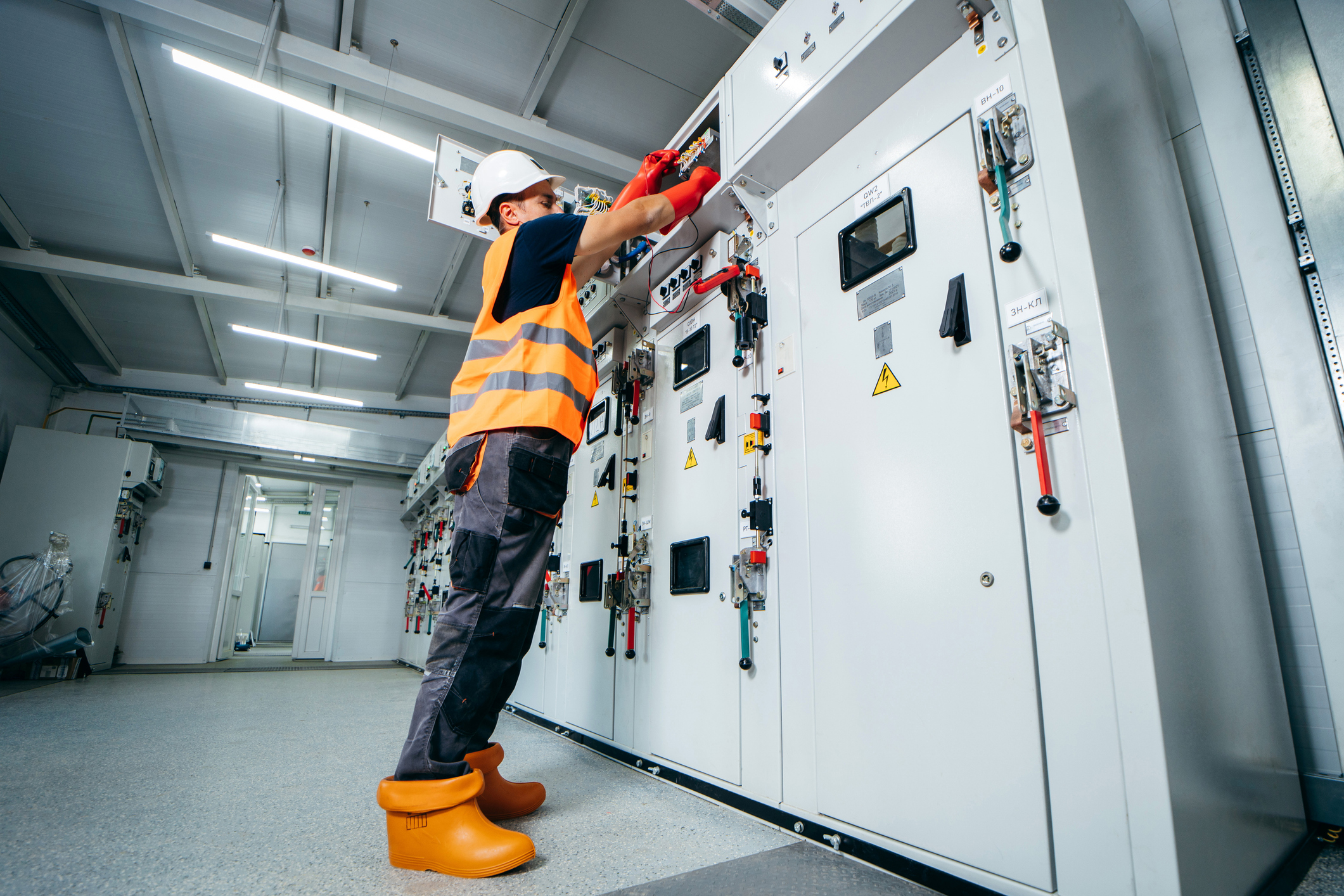
The 2023 edition swapped that word for “shall.” That’s not a cosmetic change. “Shall” means legally mandatory. Covered facilities – data centers, hospitals, manufacturers, municipalities – now have to maintain a formal electrical maintenance program, conduct regular condition assessments, and keep documentation that can hold up under an audit or an OSHA inspection.
The problem is most of those facilities don’t have one. They have spreadsheets, some paper records from the last PM visit, nothing close to what the standard actually requires. They’ll hear about it eventually from their insurer, their regulator, or from you. Whoever gets there first owns the compliance relationship.
That’s the gap this guide walks through. Not what NFPA 70B requires – that’s covered in the NFPA 70B compliance checklist – but how to turn the mandate into a service your company sells.
Who to Target First
Not every facility is the same pitch. Start with the ones that have the most to lose if something goes wrong: data centers where downtime costs hundreds of thousands per hour, hospitals where electrical failures directly affect patient care, food processing plants with 24/7 operations and FDA oversight, manufacturers running expensive equipment, and municipalities managing public infrastructure.
These organizations have compliance budgets. They respond to regulatory language. They’re used to paying for professional services rather than trying to do everything in-house. And they’re often already your PM customers – which means you have the relationship, you just haven’t pitched the compliance program yet.
Your contact is usually the facilities manager or plant engineer. They’re responsible for compliance but don’t have a system in place. Many of them don’t know NFPA 70B was even updated. When you walk in already knowing what they’re required to do and how to get them there, the conversation shifts fast.
Secondary targets: commercial property managers with multiple buildings, universities with high electrical density across campus, and manufacturers in regulated industries like pharmaceuticals and food. Read the full breakdown on the NFPA 70B for electrical contractors page.
How Gimba Handles This
Lead With the Portal, Not the Price
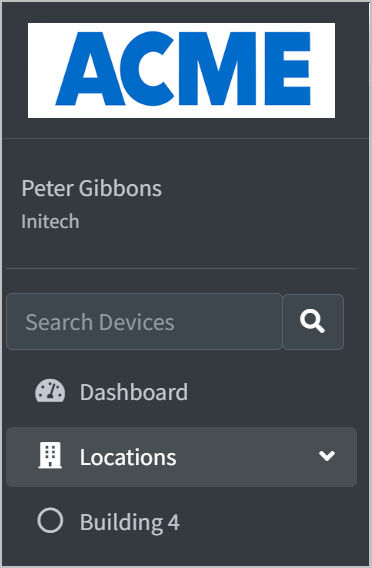
Don’t open a sales call with a quote. Open it by showing them what their compliance program looks like. Walk them through their branded client portal, their equipment list, their current condition ratings. Let them see the documentation their auditor would need, ready on demand.
When a facilities manager sees their own facility inside a live compliance system – with their logo on it – the conversation shifts from “how much” to “when can we start.”
Gimba is fully white-label. Your company name and logo appear on every screen your clients see. You become their compliance partner, not just a vendor they call once a year.
How to Structure the Service
The service structure is straightforward. Year 1 is setup and assessment. Every year after is renewal.
Year 1 – Initial Compliance Program Setup
Full condition assessment across all covered electrical equipment. Equipment inventory with nameplate capture. Electrical Maintenance Program generation – complete, NFPA 70B-compliant, audit-ready. Branded client portal setup. Initial maintenance schedule configuration.
Annual Renewal Contract
Annual reassessment visit. EMP update for any equipment changes, personnel changes, or new risk findings. Condition trend review so the client can see where things are moving. Audit-ready documentation package they can hand to an inspector or insurer.
Year 1 is where you capture your setup fee and prove the value. The renewal is where you build the recurring revenue. Clients who have a compliance portal with their logo on it and their equipment data inside it don’t leave. There’s no reason to.
How to Price NFPA 70B Compliance Services
The single biggest mistake contractors make when pricing this is treating it like a labor job. It isn’t. You’re not billing for hours on-site. You’re billing for a complete compliance program – the assessment, the EMP, the documentation system, the branded portal, the annual renewal. That’s a professional service with real market value.
Compliance consultants charge between $10,000 and $45,000 just to write an EMP. You can deliver that and everything else around it as part of a complete program. Price accordingly.
Reference ranges by facility size:
Small facility (single building, under 20 panels) – Year 1: $8,000-$12,000 / Annual renewal: $2,000-$3,500
Mid-size facility (manufacturer, school, municipal building) – Year 1: $16,000-$24,000 / Annual renewal: $4,000-$8,000
Large / multi-facility (hospital, data center, portfolio properties) – Year 1: $35,000-$50,000+ / Annual renewal: $8,000-$18,000+
These are flat program fees, not hourly rates. Your cost of delivery drops significantly when the technical work is handled by the platform. The margin on recurring annual renewals is where this model pays off.
How Gimba Handles This
The EMP Is Your Anchor Deliverable
The Electrical Maintenance Program is the centerpiece of any NFPA 70B compliance package. It’s what an auditor asks for. It’s what an insurer wants to see. Writing one manually takes days and requires deep familiarity with the standard.
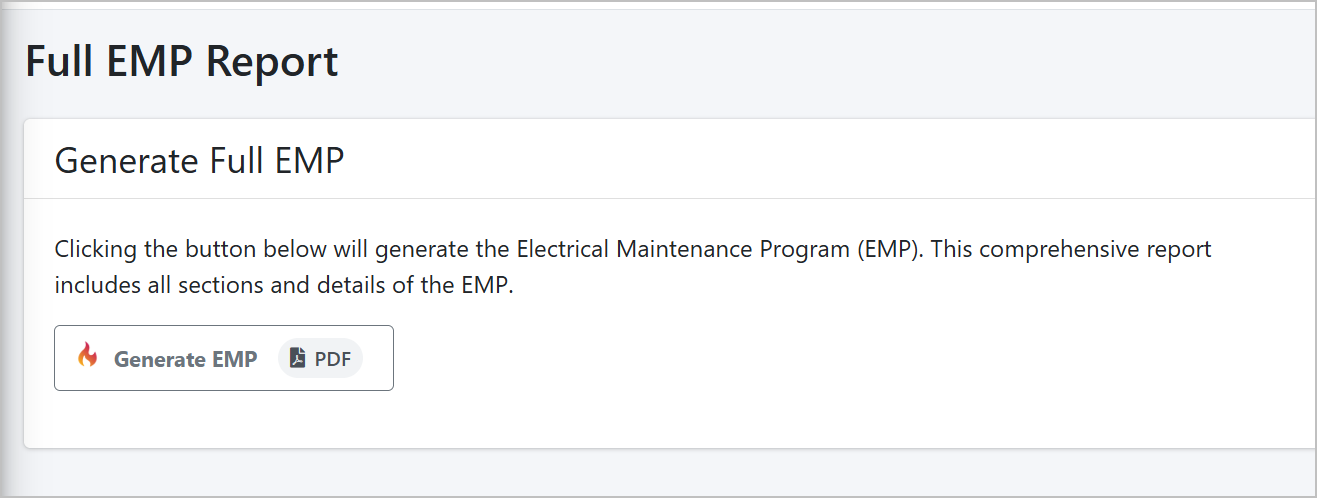
Gimba generates a complete, NFPA 70B-compliant EMP in one click. Not a template. A fully populated document with the client’s equipment, their condition ratings, their responsible personnel, and their maintenance intervals – ready to present.
Most contractors who offer EMP generation bill it as a standalone service at $3,000 to $8,000. With Gimba, it costs you one click. Structure your pricing around the value, not the effort. Not days. Not a consultant. One click.
How to Open the Conversation
Most contractors lead with a price or a scope. Don’t. Lead with the compliance gap – what the facility is required to have and what they’re missing. Here are three angles that tend to land:
“Your insurer may start requiring this.”
Commercial property and electrical liability carriers are increasingly adding NFPA 70B language to their terms. Some already require documented maintenance programs as a condition of coverage. Getting a program in place now is far easier than scrambling after a claim gets flagged.
“OSHA’s General Duty Clause applies here.”
OSHA can cite a facility under the General Duty Clause if there’s an electrical incident and no evidence of a reasonable maintenance program. The 2023 NFPA 70B standard makes it clear what “reasonable care” looks like in the electrical world. No documentation means no defense.
“You’re already doing this work.”
If you’re doing PM visits, you’re already collecting condition data on every piece of equipment in that facility. Gimba takes that data and turns it into a formal compliance program. You’re not selling them more work – you’re selling them a system that captures the value of the work they’re already paying you to do. Annual. Documented. Audit-ready.
How Gimba Handles This
No 70B Expert Needed in the Field
The barrier most contractors see is technical: “My guys aren’t NFPA 70B specialists. They can’t run a compliant condition assessment on their own.” That’s a real concern, and Gimba addresses it directly.
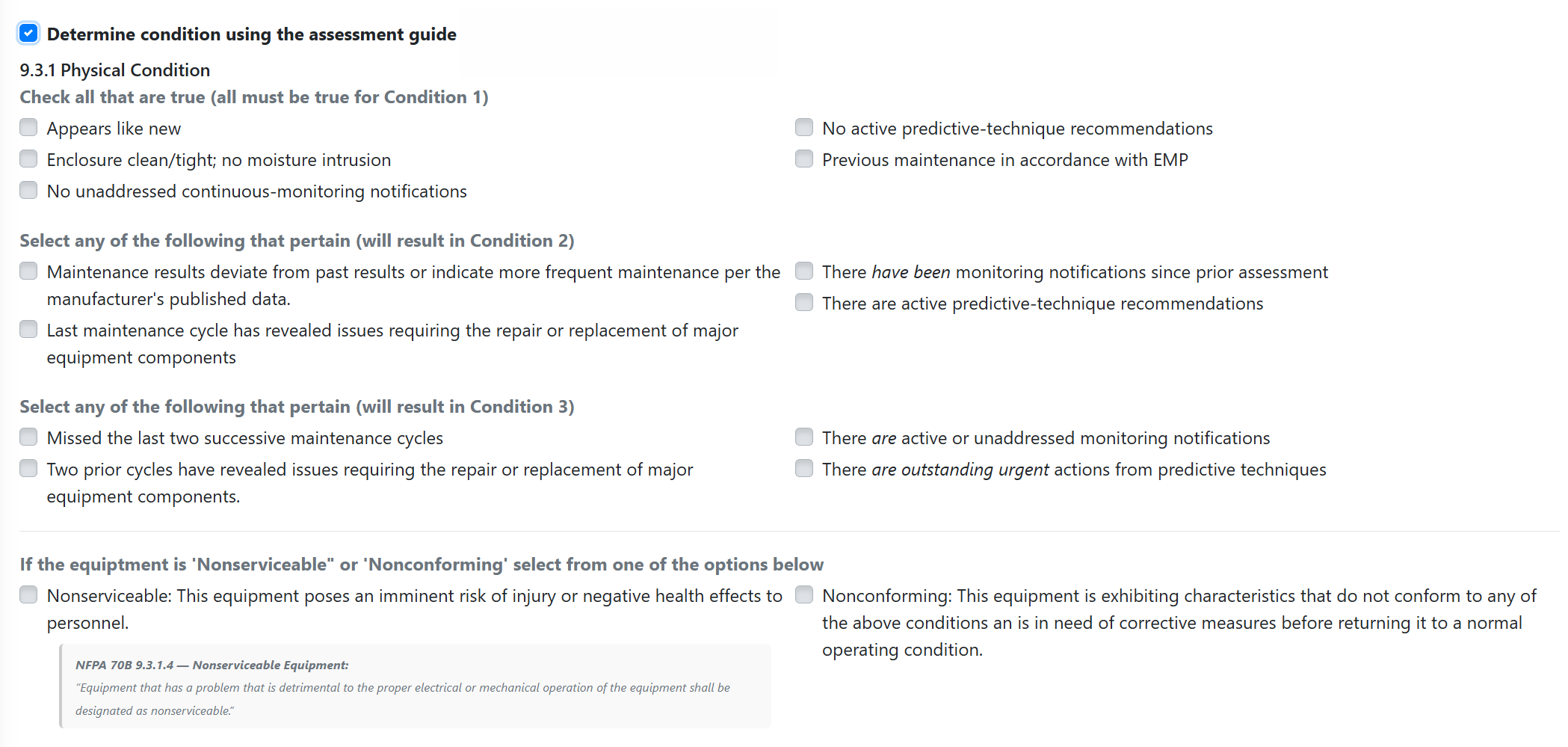
The AI-guided condition assessment tool walks any technician through NFPA 70B requirements for each equipment type – transformer, switchgear, panelboard, motor control center – step by step. The system asks the right questions. The tech answers based on what they see. The platform handles the compliance logic.
You don’t need to hire a compliance specialist. Your existing crew can deliver a complete NFPA 70B assessment on day one. That’s what makes the service scalable across every client you manage.
Free Download
NFPA 70B Contractor Sales Guide
3-page PDF. The opportunity, the service structure, the revenue model, and what to say in the first conversation. Built for working contractors.
See It Working Before You Pitch It
20-minute demo. We’ll walk through the white-label portal, show you the 1-Click EMP, and help you structure your first client package. No contracts, no commitment.
Your Action Plan: How to Start Selling NFPA 70B with Gimba
Here’s what it looks like in practice, from your first call with Gimba to your first annual renewal check:
- Book a 20-minute demo first. See the white-label portal and 1-Click EMP before you pitch it. When you land a prospect, you can run the demo yourself or have Gimba join the meeting and present as your representative. Either way works.
- Pull a list of your current PM clients in OSHA-sensitive industries: data centers, hospitals, food processing, manufacturers. You already have the relationship. You just haven’t pitched the compliance program yet.
- Open with the compliance gap, not a price. “NFPA 70B became mandatory in 2023. Most facilities don’t have a formal program. We can get you there.” Let that land before you talk numbers.
- Show the portal in the sales meeting. Not a brochure. The actual system, with your logo on it. When they see their own facility inside a compliance dashboard branded with your company name, the conversation shifts from “how much” to “when do we start.”
- Price it as a program, not a labor job. Year 1 setup fee plus an annual renewal contract. You’re delivering a compliance program with real professional and legal value. Price it that way.
- Onboard the same day they sign. Set up their account in Gimba, configure their white-label portal, send the crew out for the initial condition assessment. No waiting on consultants or back-office delays.
- Generate the EMP in one click once the assessment is complete. Deliver a full, audit-ready Electrical Maintenance Program within 24 hours of finishing the site walk. That’s your anchor deliverable.
- Lock in the annual renewal before you leave the site. NFPA 70B requires ongoing maintenance, not a one-time fix. The compliance cycle repeats every year. Your contract should too.
Frequently Asked Questions
Do I need to be an NFPA 70B expert to sell this service?
No. Gimba’s AI-guided condition assessment tools walk technicians through every NFPA 70B requirement section by section. You don’t need a compliance specialist on staff. The platform handles the technical structure; your crew handles the field work.
What does the white-label portal look like for my clients?
It looks like your company. Your logo, your colors, your name on every screen. Clients log in and see a branded compliance dashboard with their equipment condition ratings, maintenance schedules, and EMP documents. Gimba works behind the scenes – your clients never see our name.
How long does it take to onboard a new client?
Same-day onboarding. Once you set up the client account, your crew can start capturing equipment data immediately. The EMP generates in one click once the initial assessment is complete – no waiting on a consultant or a report turnaround.
Can I manage multiple client accounts from one place?
Yes. Gimba is built for contractors managing multiple facilities. You can see every client account, condition status, and upcoming maintenance from a single dashboard. Flat-rate pricing means no extra per-user fees as you add clients. The more accounts you manage, the better the margin.
Related reading: NFPA 70B Overview | What Is an Electrical Maintenance Program? | White-Label NFPA 70B Software | OSHA General Duty Clause
