

NFPA 70B COMPLIANCE
Electrical Maintenance Program (EMP)
What it is, what NFPA 70B requires, what goes in one, and how to get a compliant program in place without building it from scratch.
What Is an Electrical Maintenance Program?
An Electrical Maintenance Program is a documented system for inspecting, testing, servicing, and tracking the condition of electrical equipment in a facility. It defines what equipment is covered, who is responsible for maintaining it, how that maintenance is performed, how often it happens, and how everything gets recorded.
An EMP is not a checklist or a log. It is the governing document for a facility’s entire electrical maintenance operation. An insurance adjuster, an OSHA inspector, or an authority having jurisdiction asking to see your compliance program is asking to see your EMP.
Since the 2023 update to NFPA 70B, having a documented EMP is no longer a recommendation. The standard uses mandatory language throughout. Facilities without one are out of compliance. For a full breakdown of what the standard requires, see the NFPA 70B Electrical Maintenance Program (EMP) guide.
What NFPA 70B Requires in an EMP
NFPA 70B specifies that an EMP must address several core areas. The scope of the program and the equipment it covers. The qualifications required of personnel performing maintenance. The procedures for each type of electrical equipment. The inspection, testing, and maintenance frequencies tied to Chapter 9 intervals. The process for identifying deficiencies and tracking corrective actions. And the documentation requirements that keep the whole program auditable.
The standard also requires that the EMP be reviewed and updated periodically. Equipment gets added or removed. Personnel changes. Operating conditions shift. A program that was accurate two years ago and has not been touched since does not meet the current requirement.
For most facilities, the EMP is the hardest part of NFPA 70B compliance to build. It requires pulling together manufacturer documentation, cross-referencing maintenance intervals by equipment type, defining procedures for each asset class, and structuring it all into a document that holds up to scrutiny. Most facilities that have been meaning to build a program have stalled here.
What Goes in an Electrical Maintenance Program
A complete, NFPA 70B-compliant EMP covers the following sections.
Program scope. Which facility, which systems, and which equipment falls under the program. Switchgear, transformers, panelboards, motor control centers, UPS systems, generators, and distribution equipment are typical. The scope defines the boundaries of your compliance obligation.
Responsible personnel. Who oversees the program, who performs maintenance, and what qualifications they need. NFPA 70B requires that maintenance be performed by qualified persons. The EMP defines what qualified means for your organization.
Equipment inventory. A complete list of assets in scope with nameplate data: manufacturer, model, voltage, capacity, installation date. The maintenance schedule and condition assessment records all tie back to this list.
Maintenance procedures. How each type of equipment is to be inspected, tested, and serviced. These procedures should align with manufacturer recommendations and NFPA 70B requirements for that equipment class.
Maintenance intervals and schedule. How often each piece of equipment gets maintained. Chapter 9 of NFPA 70B provides minimum intervals by equipment type. Where manufacturer recommendations are more conservative, those take precedence.
Condition assessment records. Documentation of the condition of each asset, updated through ongoing condition assessments. This is the evidence that your maintenance program is active, not just written.
Deficiency tracking. When an inspection finds a problem, how is it recorded and resolved? The EMP needs a process for logging deficiencies, assigning corrective action, and documenting resolution.
For a step-by-step walkthrough of building each of these sections, see How to Create an Electrical Maintenance Program.
How Gimba Handles This
A Complete EMP Without the Weeks of Work
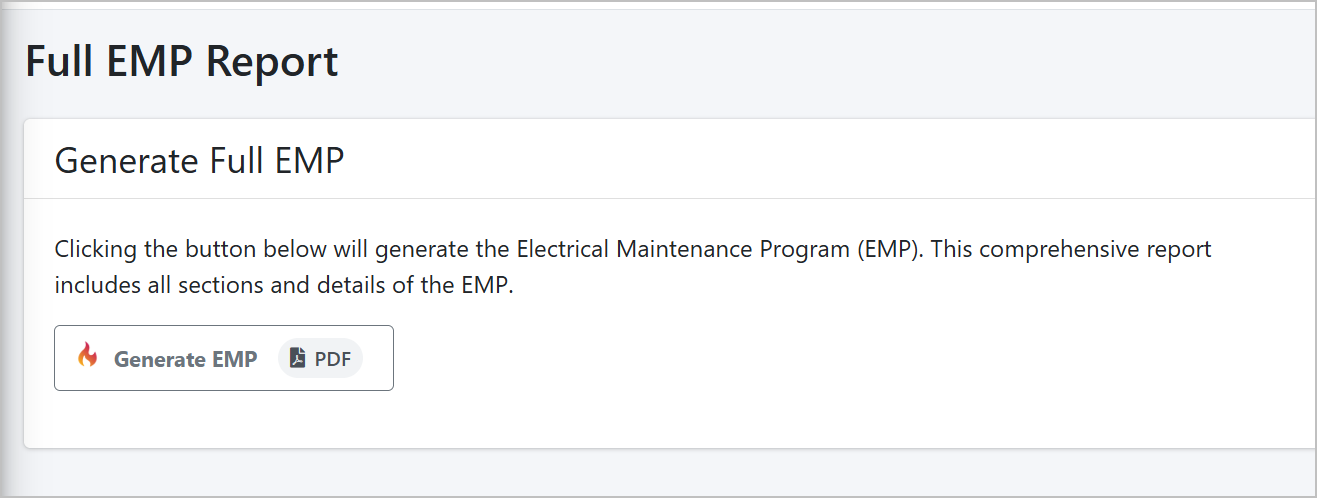
Gimba generates a complete, audit-ready Electrical Maintenance Program in one click. Every section NFPA 70B requires is covered. The document is built from your actual facility data, not a generic template. Responsible personnel, maintenance procedures, Chapter 9 intervals, condition assessment records, deficiency logs.
Not days. Not a consultant. One click.
The Three Types of Electrical Maintenance
A complete EMP typically incorporates all three types of electrical maintenance. Each serves a different function and together they form a complete program.
Preventive maintenance is time-based. Equipment gets inspected, cleaned, tested, and serviced on a defined schedule regardless of visible condition. Annual switchgear inspections, regular testing of protective devices, scheduled thermographic surveys. This is the backbone of NFPA 70B compliance.
Predictive maintenance is condition-based. Infrared thermography, power quality analysis, insulation resistance testing, and vibration analysis identify developing problems before they cause failures. NFPA 70B incorporates predictive techniques as part of a complete program. A transformer running hot on a thermal scan gets attention before it fails, not after.
Corrective maintenance addresses deficiencies found during inspections or failures that occur despite preventive efforts. A compliant EMP documents corrective work the same way it documents scheduled maintenance. The deficiency record, the corrective action taken, and the follow-up confirmation that the problem was resolved all belong in the program.
Why Facilities Without an EMP Are at Risk
The 2023 NFPA 70B revision changed the standard from recommended practice to mandatory requirements. Facilities that have been operating without a documented EMP are now out of compliance with a standard that insurers, authorities having jurisdiction, and OSHA inspectors all reference.
OSHA’s General Duty Clause allows inspectors to cite facilities for recognized hazards. An electrical incident at a facility with no documented maintenance program is a straightforward General Duty Clause case. Insurance carriers use the same logic when evaluating claims after electrical failures.
The consequences of not having a program are not theoretical. Denied claims, OSHA citations, and liability exposure after equipment failures are the real-world outcomes. The cost of building a compliant EMP is a fraction of any of those outcomes.
Free EMP Template and Compliance Spreadsheet
If you are in the early stages of building your program and want to understand the structure before committing to software, Gimba offers a free NFPA 70B compliance spreadsheet that covers the core components of an EMP. It is a working starting point, not a PDF to file away.
For facilities ready to move past spreadsheets, Gimba generates the full EMP document automatically. The compliance process that used to take weeks happens in a day.
Start with the Free Spreadsheet. Finish with Gimba.
Download the free NFPA 70B compliance spreadsheet or see how Gimba generates a complete, audit-ready EMP in one click.
Frequently Asked Questions
What is an electrical maintenance program?
An electrical maintenance program is a documented system that defines how a facility inspects, tests, services, and tracks the condition of its electrical equipment. Under NFPA 70B, every commercial and industrial facility must have one. The EMP covers equipment scope, responsible personnel, maintenance procedures, inspection frequencies, and documentation requirements.
Is an EMP required by law?
The 2023 NFPA 70B revision made EMP requirements mandatory under the standard. Whether your jurisdiction has formally adopted NFPA 70B affects direct enforcement, but OSHA’s General Duty Clause creates exposure regardless. Insurers also reference NFPA 70B when evaluating electrical claims. See the full breakdown of whether NFPA 70B is mandatory.
What are the three types of electrical maintenance?
Preventive maintenance is scheduled and time-based. Predictive maintenance uses condition monitoring techniques like infrared thermography and insulation testing to catch developing problems early. Corrective maintenance addresses deficiencies and failures after they are identified. A complete EMP incorporates all three.
How often does electrical equipment need to be maintained under NFPA 70B?
Chapter 9 of NFPA 70B provides maintenance intervals by equipment type. Most switchgear and distribution equipment runs on annual cycles, though operating environment, equipment age, and condition assessment results can tighten that schedule. Manufacturer recommendations also apply and take precedence where they are more conservative than the Chapter 9 defaults.
Can I use a template or spreadsheet to build my EMP?
A template gives you the structure. You still need to populate it with your actual equipment data, procedures, intervals, and personnel records. Gimba’s free NFPA 70B spreadsheet is a solid starting point. For a fully generated EMP built from your facility data, Gimba’s software does it in one click with same-day onboarding.
What is the difference between an EMP and a preventive maintenance checklist?
A checklist is a single task record. An EMP is the governing document for your entire electrical maintenance operation. The EMP defines the scope, procedures, intervals, personnel requirements, and documentation standards that all maintenance activities follow. Checklists and inspection records are outputs of the EMP, not replacements for it.
Related reading: NFPA 70B Overview | How to Comply with NFPA 70B | EMP Requirements Explained | How to Sell Compliance as a Service | Chapter 9 Maintenance Intervals | Schedule a Demo
