

If you manage a facility with electrical equipment, you need to know what NFPA 70B is and what it requires from you. The standard changed significantly in 2023. What was once a set of recommendations is now a binding requirement – and the consequences of non-compliance are real.
This guide covers what the standard is, what changed, what it requires, who it applies to, and how facilities are actually meeting their obligations today.
What Is NFPA 70B?
NFPA 70B is the Standard for Electrical Equipment Maintenance, published by the National Fire Protection Association. It defines the requirements for establishing and maintaining a documented, risk-based program to keep electrical equipment in safe, reliable operating condition.
The standard covers the full lifecycle of electrical maintenance: building an equipment inventory, conducting condition assessments, setting maintenance intervals based on those assessments, performing inspections and testing, and keeping complete records of everything.
Think of it as the playbook for how a facility’s electrical maintenance program should be structured and documented. Not just doing maintenance – proving it, recording it, and managing it systematically over time.
The 2023 Edition Made It Mandatory
Before 2023, NFPA 70B was titled Recommended Practice for Electrical Equipment Maintenance. The word “recommended” mattered. It meant facilities should follow the standard, but weren’t required to.
The 2023 edition dropped that title entirely. It became the Standard for Electrical Equipment Maintenance. Every instance of the advisory word “should” was replaced with the binding word “shall.” That single change converted decades of recommendations into legal requirements.
Facilities that were complying voluntarily stayed in good shape. Facilities that treated NFPA 70B as optional found themselves out of compliance with a standard that now has real enforcement consequences.
What NFPA 70B Actually Requires
At its core, NFPA 70B requires a written Electrical Maintenance Program (EMP). The EMP is a documented system covering five areas:
Every piece of electrical equipment in your facility must be identified, classified, and documented. Equipment type, location, ratings, and installation data. Nothing can be on an unknown or informal schedule.
Each asset must be periodically evaluated by a qualified person. The assessment covers physical condition, electrical condition, operating environment, loading, criticality, and maintenance history. The result is a condition rating – Condition 1 through Nonserviceable – that drives the maintenance schedule.
Maintenance frequency is set by device type and condition rating, not by calendar. A Condition 1 transformer operates on a different schedule than a Condition 3 switchgear assembly. Intervals must be documented and followed.
Your EMP must specify the inspection, testing, and maintenance procedures required for each equipment type. This includes visual inspections, thermographic scanning, insulation resistance testing, and other procedures appropriate to the device type and condition.
Every inspection, assessment, test, and corrective action must be documented and retained. Records must identify what was done, when, by whom, and what was found. This is what auditors, insurers, and regulators ask for when they come to your facility.
Who Does NFPA 70B Apply To?
NFPA 70B applies to facilities with significant electrical infrastructure. The standard doesn’t provide a specific voltage or size threshold, but in practice it covers any facility where electrical equipment failure would create safety, operational, or financial risk.
The facilities most consistently cited in NFPA 70B compliance discussions:
✓ Data centers
✓ Hospitals and healthcare facilities
✓ Municipalities and utilities
✓ Manufacturing plants
✓ Universities and campuses
✓ Food and beverage facilities
✓ Commercial buildings
✓ Power plants
How NFPA 70B Is Enforced
There’s no single federal agency that enforces NFPA 70B directly. The enforcement is more diffuse and, in some ways, more consequential for that reason.
Insurance underwriters request EMP documentation during applications, renewals, and after any electrical incident. A missing or outdated program can result in coverage denial, claim denial, or significant premium increases.
OSHA references NFPA 70B as the recognized benchmark for electrical maintenance practice under 29 CFR 1910.303 and related sections. During incident investigations or programmed inspections, OSHA inspectors evaluate maintenance programs against the NFPA 70B standard.
Authorities Having Jurisdiction (fire marshals, building inspectors, local electrical authorities) can require NFPA 70B compliance as a condition of occupancy in some jurisdictions.
Plaintiff attorneys following any electrical incident will request maintenance documentation. A facility without a current program faces significant liability exposure in litigation.
HOW GIMBA HANDLES THIS
Your Complete NFPA 70B Program in One Click
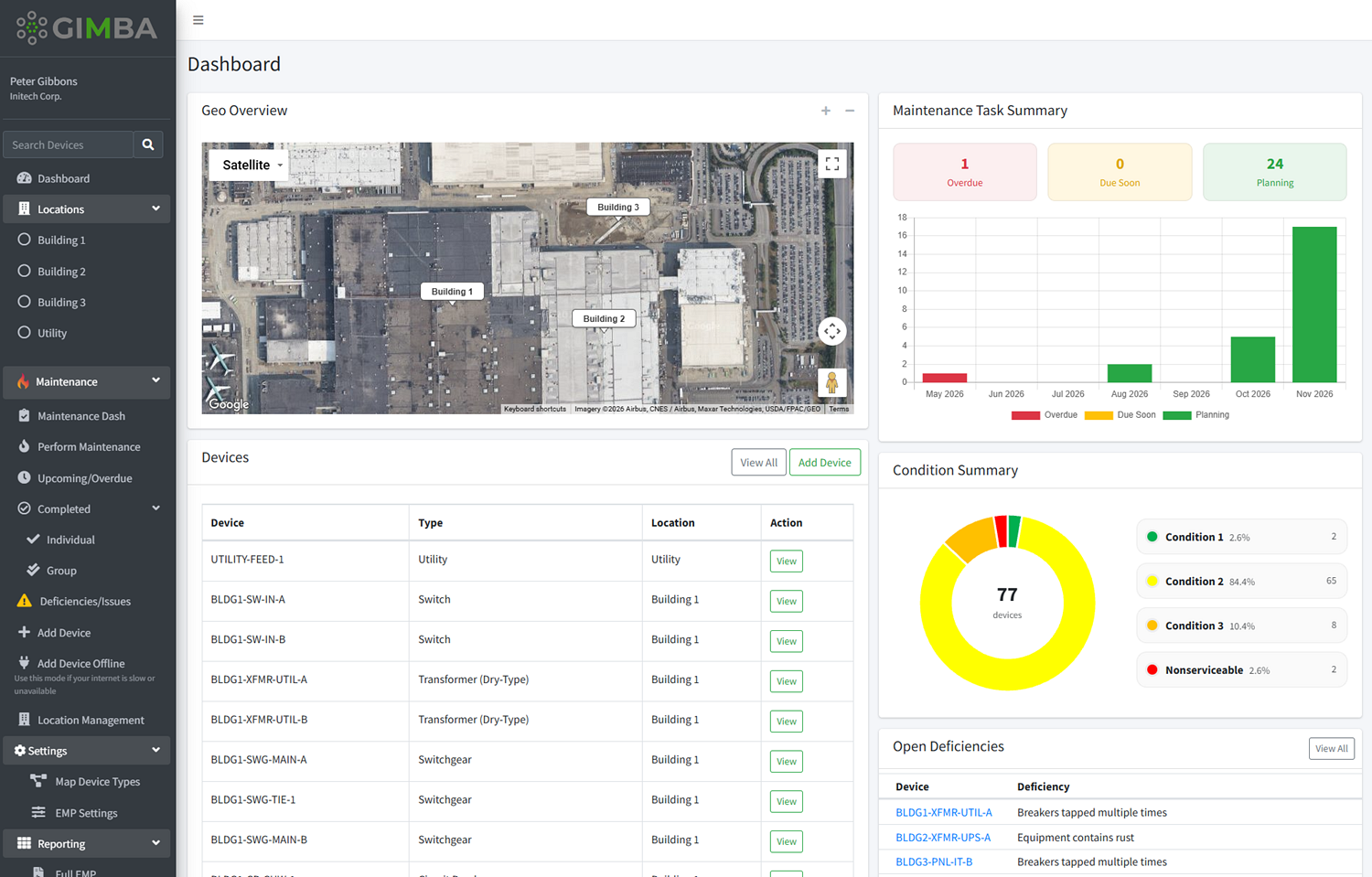
Gimba manages every component NFPA 70B requires in one platform. Your asset inventory, condition assessments, risk-based maintenance scheduling, complete inspection records, and one-click EMP generation.
Most facilities are up and running the same day they onboard. Flat-rate pricing, no per-user fees, same-day EMP delivery.
Frequently Asked Questions About NFPA 70B
What is NFPA 70B?
NFPA 70B is the Standard for Electrical Equipment Maintenance published by the National Fire Protection Association. It defines requirements for establishing and maintaining a documented, risk-based Electrical Maintenance Program covering all electrical equipment in a facility.
Is NFPA 70B mandatory?
Yes. The 2023 edition converted from recommended practice to binding standard, replacing advisory language with mandatory requirements. Facilities with significant electrical infrastructure are required to have a documented program in place. Read more about the legal status of NFPA 70B.
Who enforces NFPA 70B?
Insurance underwriters, OSHA inspectors, Authorities Having Jurisdiction, and legal counsel following electrical incidents. Non-compliance creates exposure across all of these channels simultaneously.
What is the difference between NFPA 70B and NFPA 70E?
NFPA 70B covers equipment maintenance programs. NFPA 70E covers worker safety during electrical work. Both may apply to your facility. See our full NFPA 70B vs NFPA 70E comparison.
How often is NFPA 70B updated?
NFPA standards operate on roughly three-year revision cycles. The current edition is 2023. The 2026 revision cycle is underway. Facilities using software to manage their programs can adapt to new requirements far more easily than those managing programs manually.
Related reading: NFPA 70B Overview | What an EMP Requires | Maintenance Intervals | NFPA 70B vs 70E | NFPA 70B Software | Consequences of Non-Compliance
