Most facility managers ask what NFPA 70B requires. The smarter question is what happens when you don’t have it. The consequences of NFPA 70B non-compliance are not theoretical. They show up in denied insurance claims, OSHA citations, and courtrooms – usually after something has already gone wrong.
NFPA 70B Is a Binding Standard, Not a Suggestion
The 2023 edition replaced “should” language with “shall” throughout. That one word carries real legal weight. “Should” is advisory. “Shall” is mandatory. Facilities covered by the standard are required to have a documented, risk-based Electrical Maintenance Program in place – not encouraged to have one.
Some jurisdictions and insurance policies have formally adopted the 2023 edition. Even where they haven’t, insurers and regulators treat NFPA 70B as the benchmark for reasonable electrical maintenance practice. That distinction matters when a claim is on the table.
The Real Consequences of Non-Compliance
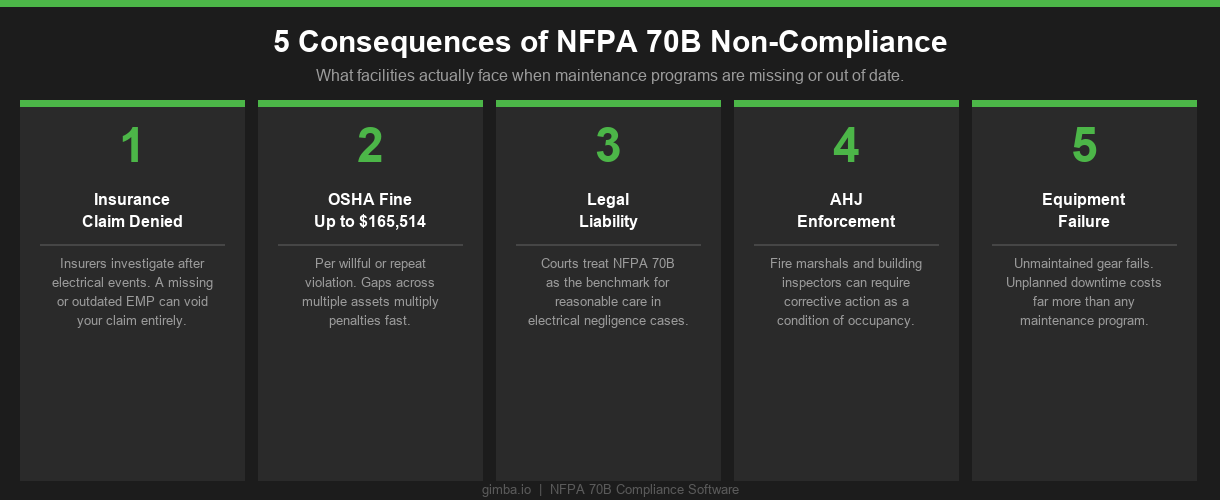
1. Insurance Claim Denials
This is the consequence that surprises facilities most. After an electrical fire, equipment failure, or arc flash event, your insurer will conduct a thorough investigation. Among the first things they request is your Electrical Maintenance Program documentation.
If your EMP is missing, incomplete, or years out of date, the insurer may find that the failure resulted from inadequate maintenance and deny the claim. Electrical losses can run into the hundreds of thousands or millions of dollars. A denial over a missing maintenance program is a completely preventable catastrophe.
Beyond claim denials, facilities without documented programs often face coverage cancellations at renewal or significantly elevated premiums once underwriters audit the risk profile.
How Gimba Handles This
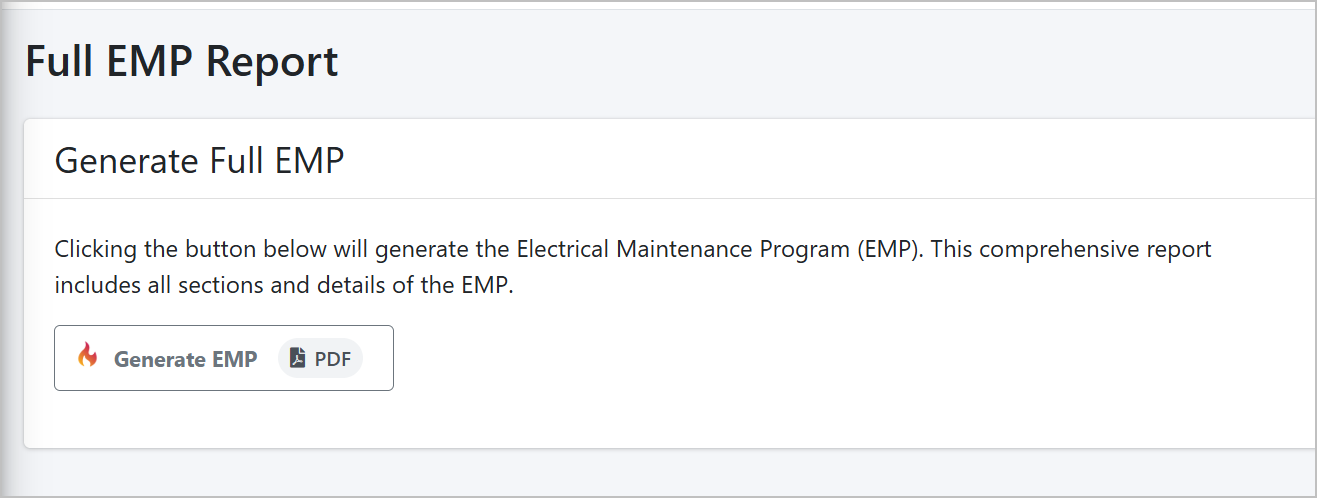
The document insurers want most is your Electrical Maintenance Program, and they want to see that it reflects current activity. Gimba generates a complete, formatted EMP in one click, automatically populated with your current condition assessments, asset inventory, and maintenance records. When your insurer calls, you are not scrambling to piece something together. You pull it up and send it.
2. OSHA Citations and Financial Penalties
OSHA 1910.303 and related electrical standards require employers to maintain electrical equipment in safe condition. When OSHA investigates an incident or conducts a programmed inspection, NFPA 70B serves as the accepted industry benchmark.
A facility without a documented maintenance program, or with one that clearly has not been followed, can face:
- Serious violations: up to $16,550 per violation
- Willful or repeat violations: up to $165,514 per violation
- Potential operational shutdown until hazardous conditions are corrected
Penalties compound quickly when multiple equipment types have maintenance gaps. A single inspection covering a dozen assets without current assessments can generate a dozen citations.
How Gimba Handles This
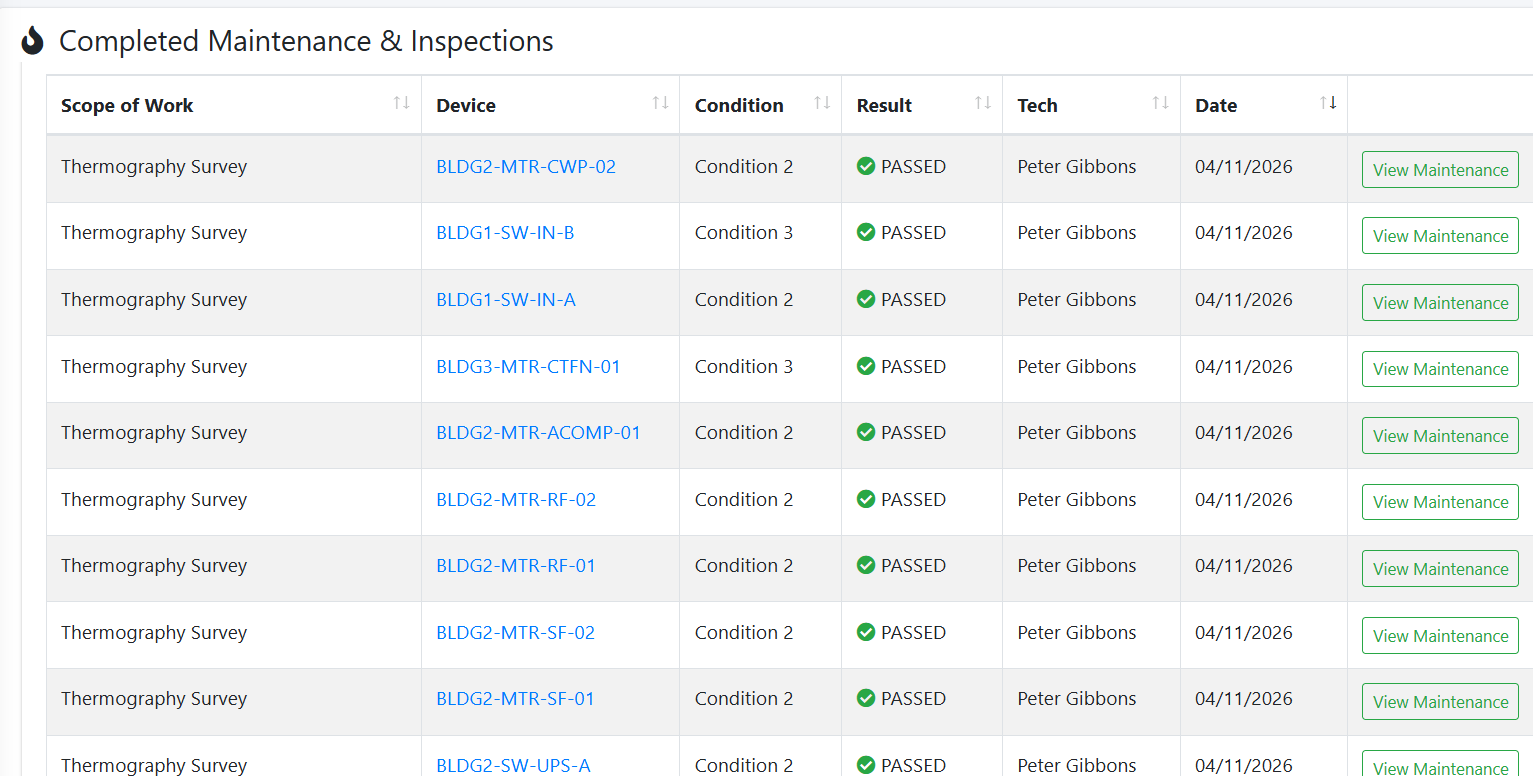
Gimba keeps a complete, timestamped maintenance log for every asset in your system. When an OSHA inspector walks in, you can show them exactly when each piece of equipment was last assessed, what condition it was in, what maintenance was performed, and who performed it. No spreadsheets to hunt down, no records to compile the night before an audit.
3. Legal Liability After an Electrical Incident
When an arc flash, electrical fire, or equipment failure injures a worker or causes significant property damage, the litigation that follows will scrutinize your maintenance records carefully. Plaintiff attorneys know exactly what to ask for.
A facility that cannot produce a current, complete maintenance program is effectively demonstrating to a jury that it did not take reasonable precautions to prevent the incident. Courts have increasingly treated NFPA standards as the benchmark for reasonable care in electrical maintenance negligence cases.
Missing maintenance records don’t only hurt in regulatory reviews. They follow every insurance claim, contractor dispute, and injury case tied to your electrical systems.
4. AHJ Enforcement Actions
The Authority Having Jurisdiction (whether a fire marshal, building inspector, or local electrical authority) can require NFPA 70B compliance as a condition of occupancy in some jurisdictions. Facilities failing an AHJ inspection for maintenance-related issues face required corrective actions with defined timelines, reinspection fees, and notices of violation that become part of the public record.
5. Equipment Failure and Unplanned Downtime
Separate from regulatory exposure, there is the operational reality: electrical equipment that is not maintained fails. Switchgear accumulates contamination and loose connections. Transformers without documented condition assessments can fail catastrophically. Unplanned downtime in industrial or commercial facilities typically costs far more than the maintenance program that would have prevented it.
Who Checks for NFPA 70B Compliance?
Compliance is not evaluated by one authority. It is examined by several, often in the aftermath of an incident when you least want the scrutiny:
- Insurance underwriters during policy applications, renewals, or after a claim
- OSHA inspectors during programmed inspections or incident investigations
- Fire marshals and AHJs during occupancy or fire inspections
- Facility auditors such as Joint Commission for hospitals, Tier certification for data centers, and government auditors
- Plaintiff attorneys after any electrical incident involving injury or significant property damage
The Cost Comparison: Compliance vs. Non-Compliance
A documented, software-managed NFPA 70B program costs a fraction of what non-compliance costs when something goes wrong. For most facilities, the real barrier isn’t money – it’s the time and complexity of building a program from scratch. That’s the exact problem compliance software exists to solve.
How Gimba Handles This
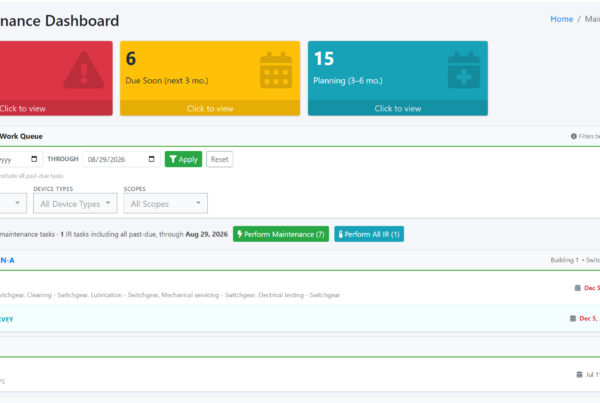
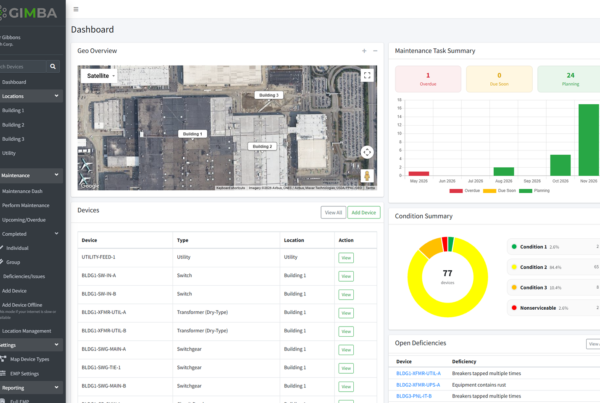
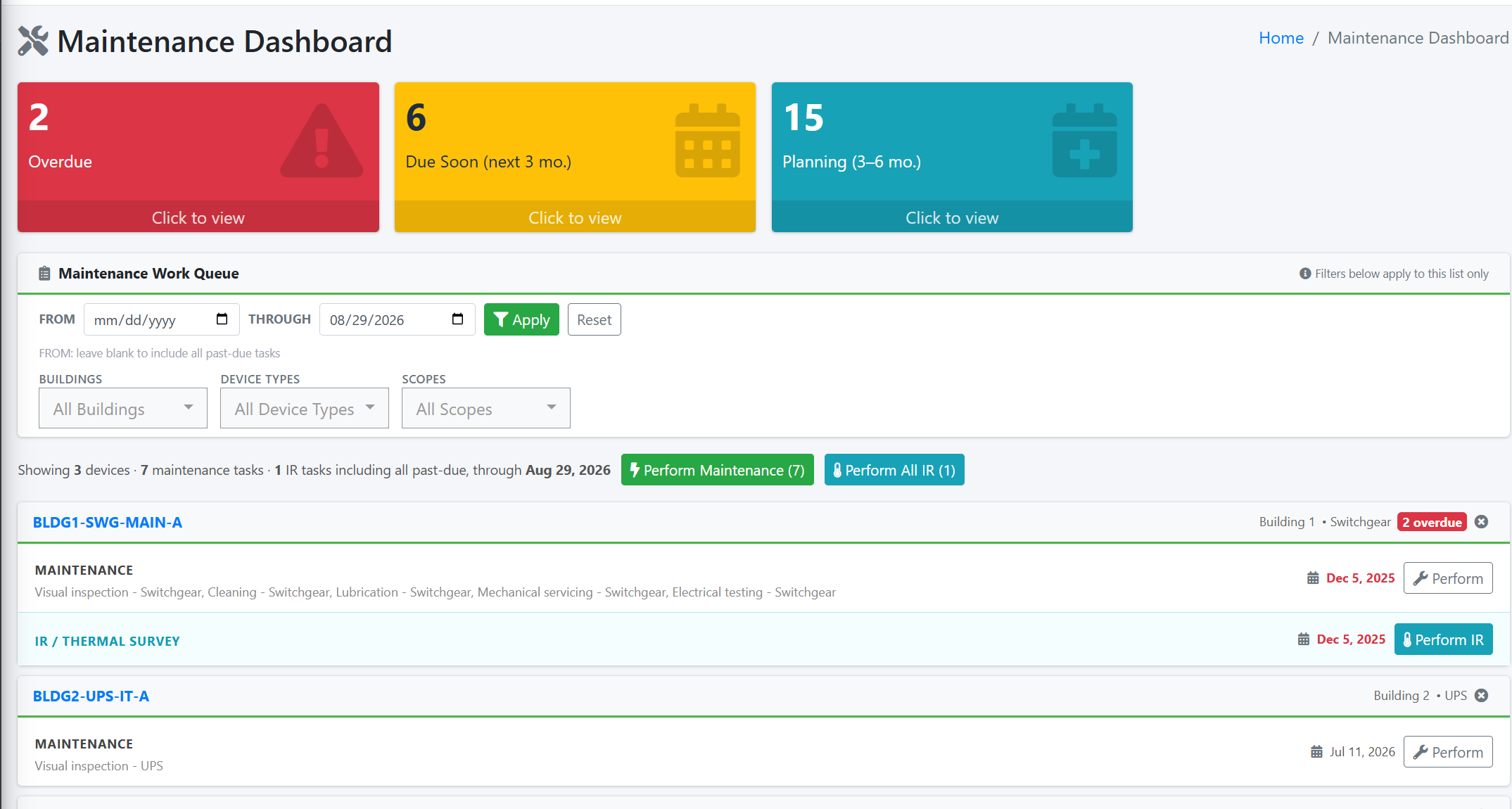
Gimba also runs reports that forecast upcoming maintenance needs across your entire asset inventory, so you can plan resources and budget rather than react to failures. You can see what is due this quarter, what is trending toward a Condition 3 rating, and where your highest-risk assets sit, all from one dashboard.
Get Compliant Before It Becomes a Crisis
Gimba generates a complete, audit-ready NFPA 70B Electrical Maintenance Program in one click. Most facilities are compliant the same day they onboard.
Frequently Asked Questions
Can OSHA directly enforce NFPA 70B?
OSHA does not adopt NFPA 70B as a regulation directly, but uses it as the recognized industry standard when evaluating electrical maintenance under 29 CFR 1910.303 and related sections. In practice, facilities without documented maintenance programs face significant OSHA exposure.
What if our program exists but is years out of date?
An outdated program is better than none, but NFPA 70B requires your EMP to reflect current equipment conditions and current maintenance activities. A program last updated three years ago, without condition assessments conducted since, is unlikely to satisfy an insurer or OSHA inspector examining a post-incident record.
How quickly can a facility become compliant?
Faster than most expect. With the right software, facilities with equipment data ready can generate a compliant EMP the same day they onboard. Schedule a demo to see the process for your facility type.
Related reading: What Your EMP Must Contain | NFPA 70B vs NFPA 70E | NFPA 70B Compliance Software