

“We were up and running the same day. The assessments walk you through every piece of equipment so your crew doesn’t have to be 70B experts, and the documentation it produces is exactly what our compliance team needs. Easy to use, does what it says. I’d recommend it to any facility manager dealing with these requirements.”
Electrical Foreman, Large Public Hospital, Chicago, IL
Why Hospital NFPA 70B Compliance Is Different
When the 2023 NFPA 70B update made ongoing electrical maintenance programs mandatory, hospitals faced a compliance question no other facility type shares: how do you run a fully documented electrical maintenance program on systems where a failure isn’t an operational inconvenience – it’s a patient safety event?
NFPA 70B applies fully to hospitals. The compliance stakes are higher than in almost any other setting, and the oversight is more intense. A hospital faces simultaneous scrutiny from The Joint Commission, CMS, state health departments, insurance underwriters, and OSHA – each looking at the same maintenance documentation from a different direction.
A single gap can trigger findings across all of them at once.
The Compliance Pressures Unique to Healthcare
JOINT COMMISSION & CMS
Accreditation Surveys Look for Exactly This Documentation
The Joint Commission’s Environment of Care standard EC.02.05.01 requires hospitals to maintain utilities equipment in safe, reliable condition. Surveyors examine maintenance documentation during accreditation reviews – specifically the kind of records NFPA 70B requires.
A complete NFPA 70B program with current condition assessments, documented intervals, and a written EMP directly satisfies what surveyors look for. Facilities without it face findings requiring corrective action plans and follow-up surveys.
CMS Conditions of Participation carry the same expectations. A hospital that loses accreditation over maintenance documentation gaps faces consequences far beyond the cost of a proper program.
EQUIPMENT COVERAGE
Every Asset. Every Branch. Fully Documented.
Hospital NFPA 70B programs must cover the full electrical distribution system – not just the equipment your PM contractor visits. The complete asset inventory includes:
✓ Emergency generators and paralleling switchgear
✓ Automatic and static transfer switches
✓ Main switchgear and medium-voltage distribution
✓ UPS systems protecting critical clinical loads
✓ Transformers feeding patient care areas
✓ Panel boards in surgical suites, ICUs, and imaging
HOW GIMBA HANDLES THIS
Your Team Doesn’t Need to Be NFPA 70B Experts
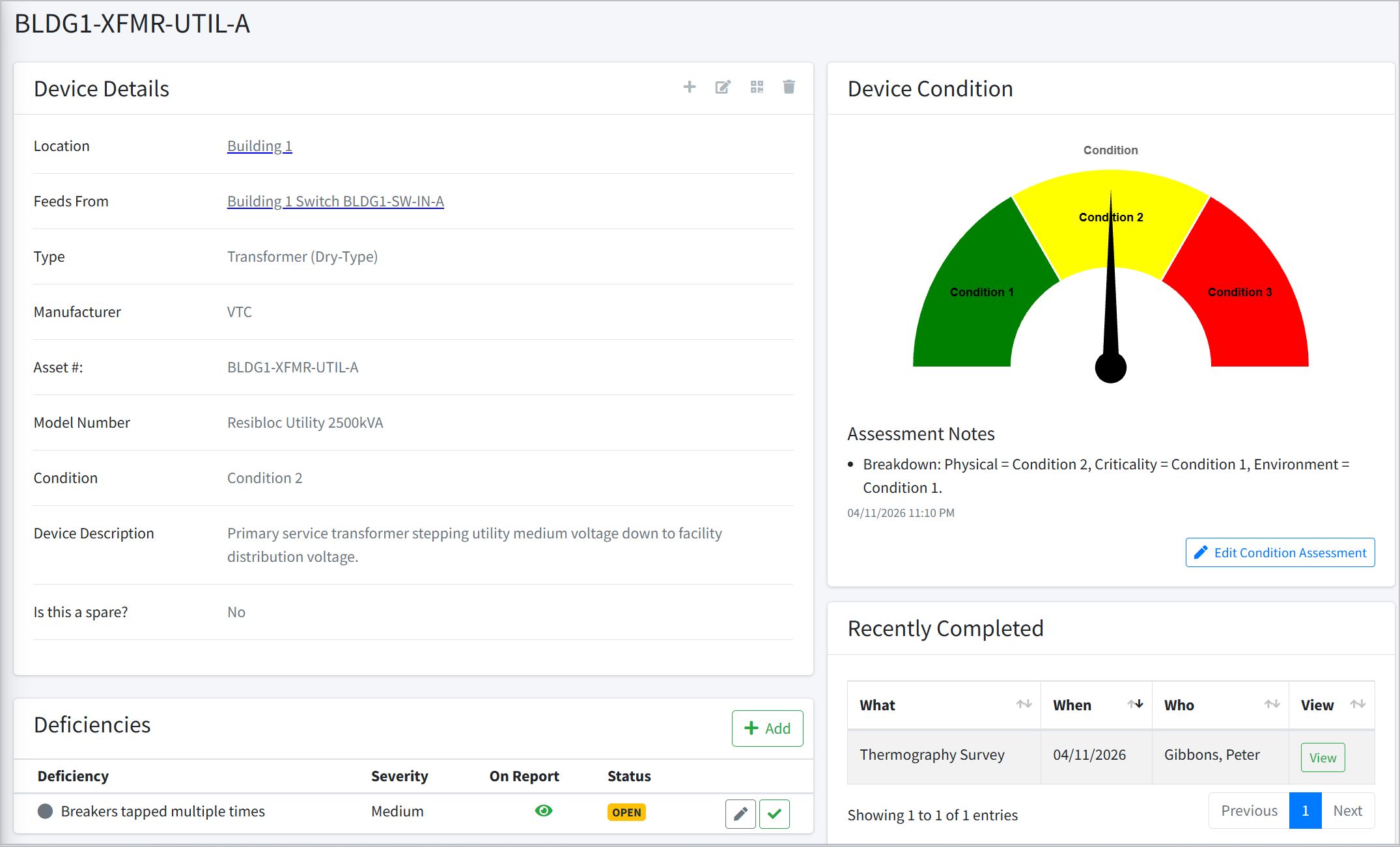
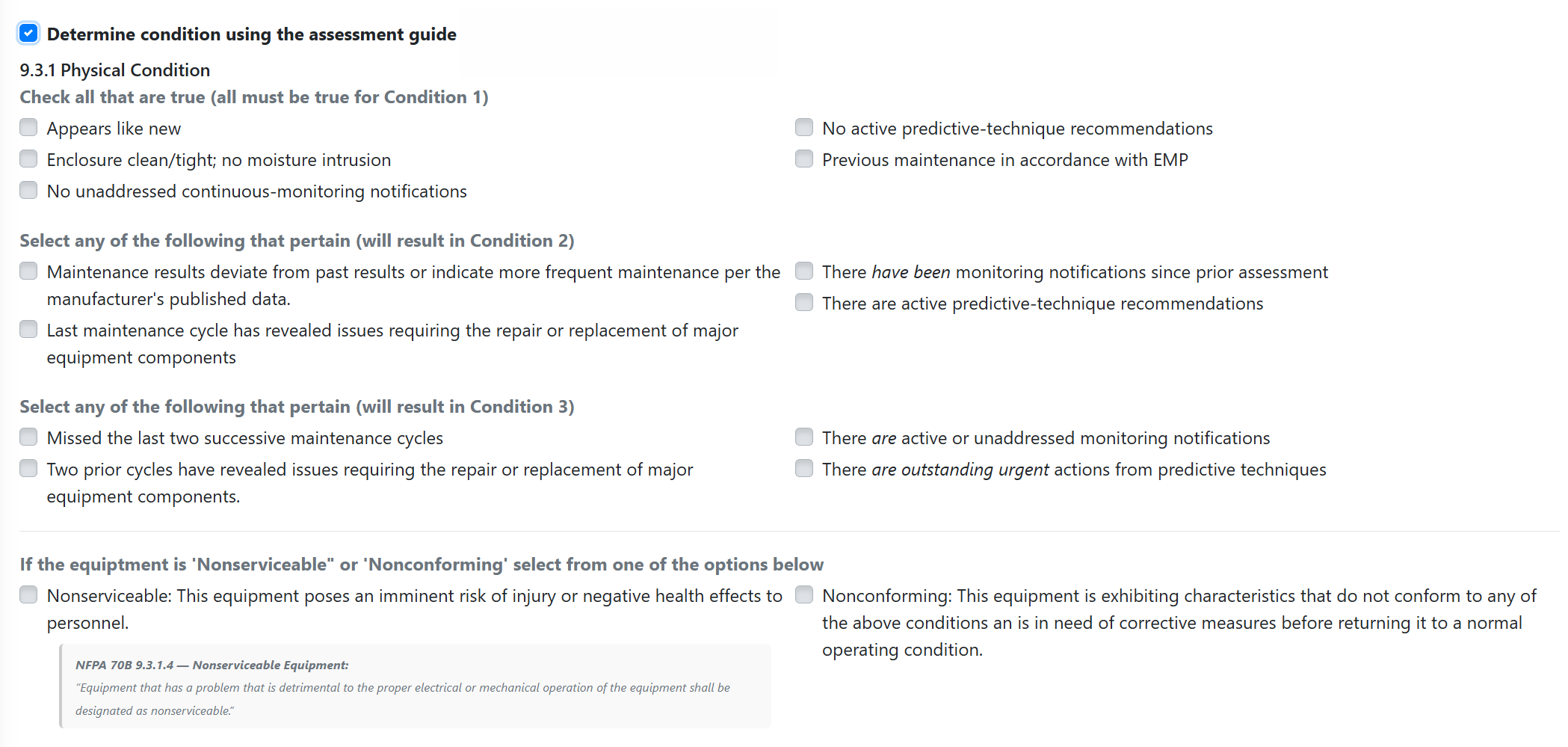
Gimba’s guided condition assessment walks technicians through every evaluation criterion for each device type. Plain-language questions. The system applies NFPA 70B criteria automatically and sets the correct maintenance interval based on device type and condition rating.
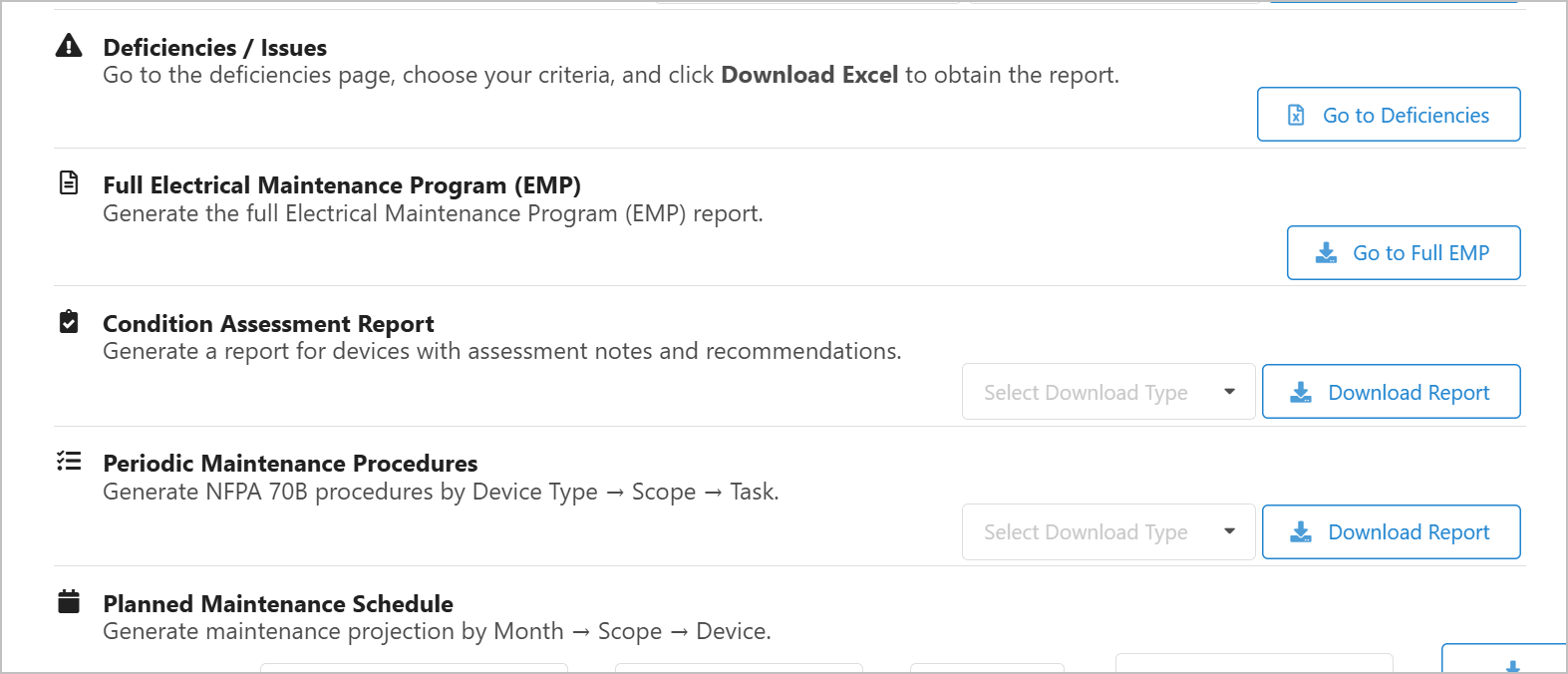
When a Joint Commission surveyor asks for your electrical maintenance documentation, you generate your complete Electrical Maintenance Program in one click. Full asset inventory, current condition ratings, maintenance history, and upcoming schedule – formatted and ready.
Flat-rate pricing. Same-day onboarding. No per-user fees.
Healthcare Insurance and NFPA 70B Documentation
Property and business interruption insurance for hospitals is expensive and increasingly tied to maintenance documentation. Underwriters request EMP documentation during applications, renewals, and after any electrical event.
A hospital that cannot produce current records after an electrical incident faces claim denial on top of the operational and patient safety consequences. A complete, software-managed program is the most cost-effective risk management a healthcare facility can implement.
Build Your Hospital NFPA 70B Program Today
Most hospital maintenance teams are up and running the same day. Import existing equipment data or start fresh – Gimba handles the complexity of healthcare electrical systems.
Frequently Asked Questions
Does NFPA 70B apply to hospitals?
Yes. NFPA 70B applies to any facility with significant electrical infrastructure – and hospitals sit at the top of that list. The 2023 edition made compliance mandatory. Hospitals are required to have a documented, ongoing Electrical Maintenance Program covering all electrical equipment.
How does NFPA 70B interact with Joint Commission requirements?
The Joint Commission’s EC.02.05.01 requires documented utilities maintenance. A complete NFPA 70B program with current condition assessments and maintenance records directly satisfies what surveyors look for. Facilities without documentation face corrective action findings and follow-up surveys.
Who inspects hospitals for NFPA 70B compliance?
The Joint Commission, CMS, state health departments, insurance underwriters, and OSHA inspectors. Each evaluates the same documentation from a different angle. A single gap creates exposure across all of them simultaneously.
What is the Essential Electrical System and how does NFPA 70B apply?
The Essential Electrical System is the backup power infrastructure required by NEC Article 517 – the Life Safety Branch, Critical Branch, and Equipment Branch. All EES equipment requires documented maintenance under NFPA 70B. Generators, transfer switches, and UPS systems all fall within scope. See our system studies guide for how arc flash and system studies interact.
How quickly can a hospital get compliant with Gimba?
Most hospitals are up and running the same day. If existing equipment data is in a spreadsheet or electrical study files, Gimba imports it and generates a compliant EMP within hours. Starting from scratch typically takes one to three days on-site with the guided nameplate capture workflow.
Related reading: What Is NFPA 70B? | What an EMP Requires | Maintenance Intervals | NFPA 70B Software | Consequences of Non-Compliance | Schedule a Demo
