

Why Asset Tracking Is the Foundation of NFPA 70B Compliance
The NFPA 70B Standard for Electrical Equipment Maintenance requires a complete inventory of every electrical asset in your facility. Every breaker, transformer, panel, switchgear assembly, and critical connection. OSHA electrical safety standards require employers to maintain electrical equipment in documented, safe condition – NFPA 70B is the framework that satisfies that requirement. Each one must be identified, classified, assigned a condition rating, and tied to a maintenance schedule.
That inventory isn’t just a list. It’s the foundation of your entire Electrical Maintenance Program. No accurate inventory means no valid EMP. No EMP means you’re not compliant – regardless of how much maintenance you’re actually doing.
Most facilities are working from outdated one-line diagrams, partial spreadsheets, or nothing at all. Gimba fixes that problem and keeps the inventory current as your equipment changes.
FIELD DATA CAPTURE
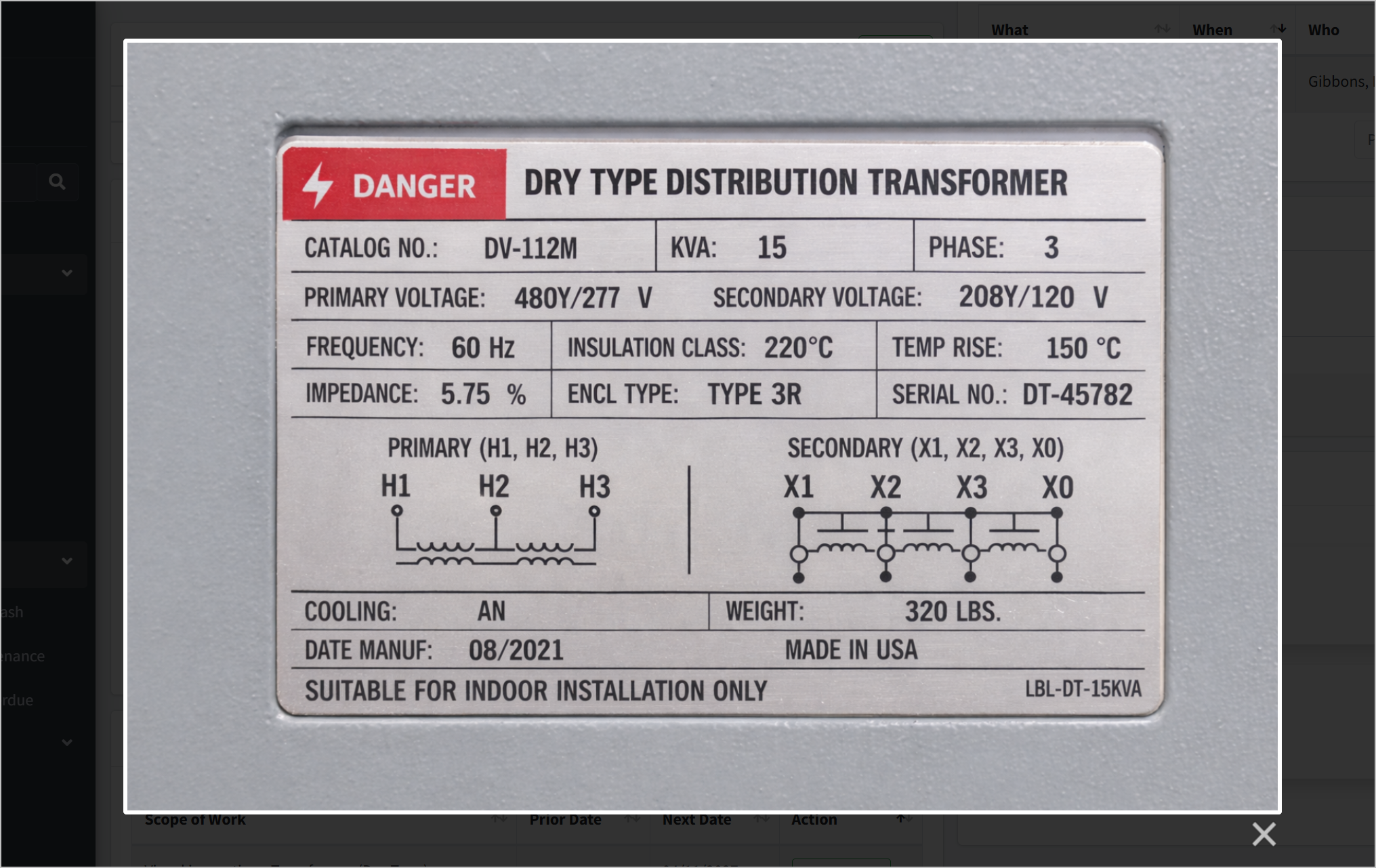
Photograph the Nameplate. Gimba Builds the Record.
Your technician walks the facility and photographs each device’s nameplate. Gimba reads the nameplate data and auto-populates the asset record – manufacturer, model, serial number, voltage rating, installation location.
No manual data entry for every field on every device. No transcription errors from handwritten notes. The inventory builds itself as your crew walks the floor.
You can also import existing data from spreadsheets, SKM and ETAP electrical study files, and PDF one-line diagrams.
ASSET RECORDS
Every Asset. Full History. Always Current.
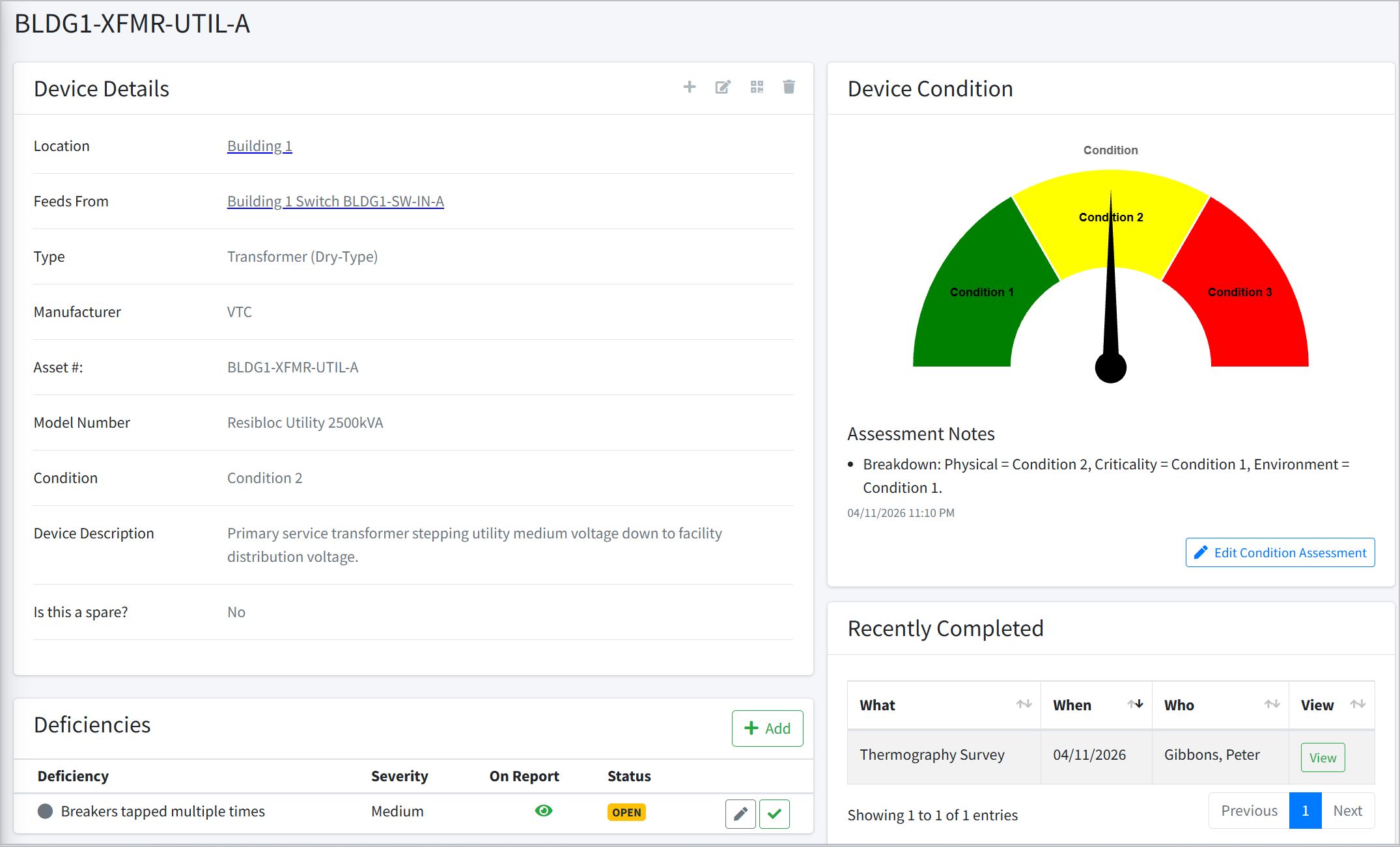
Each asset record in Gimba holds the complete picture: nameplate data, current condition rating, last assessment date, maintenance history, any deficiencies found, corrective actions taken, and the next scheduled maintenance date.
When an auditor or insurer asks about a specific piece of equipment, you pull up the record. Every action logged, every inspection documented, every condition change tracked. That’s what NFPA 70B requires and what Gimba delivers.
As conditions change over time, the record updates. As maintenance is completed, it logs automatically. The asset history builds itself.
SMART SCHEDULING
Condition Drives the Schedule. Not the Calendar.
NFPA 70B doesn’t use fixed annual schedules. Maintenance intervals are risk-based – driven by device type and condition rating. A Condition 1 transformer gets a different schedule than a Condition 3 switchgear assembly.
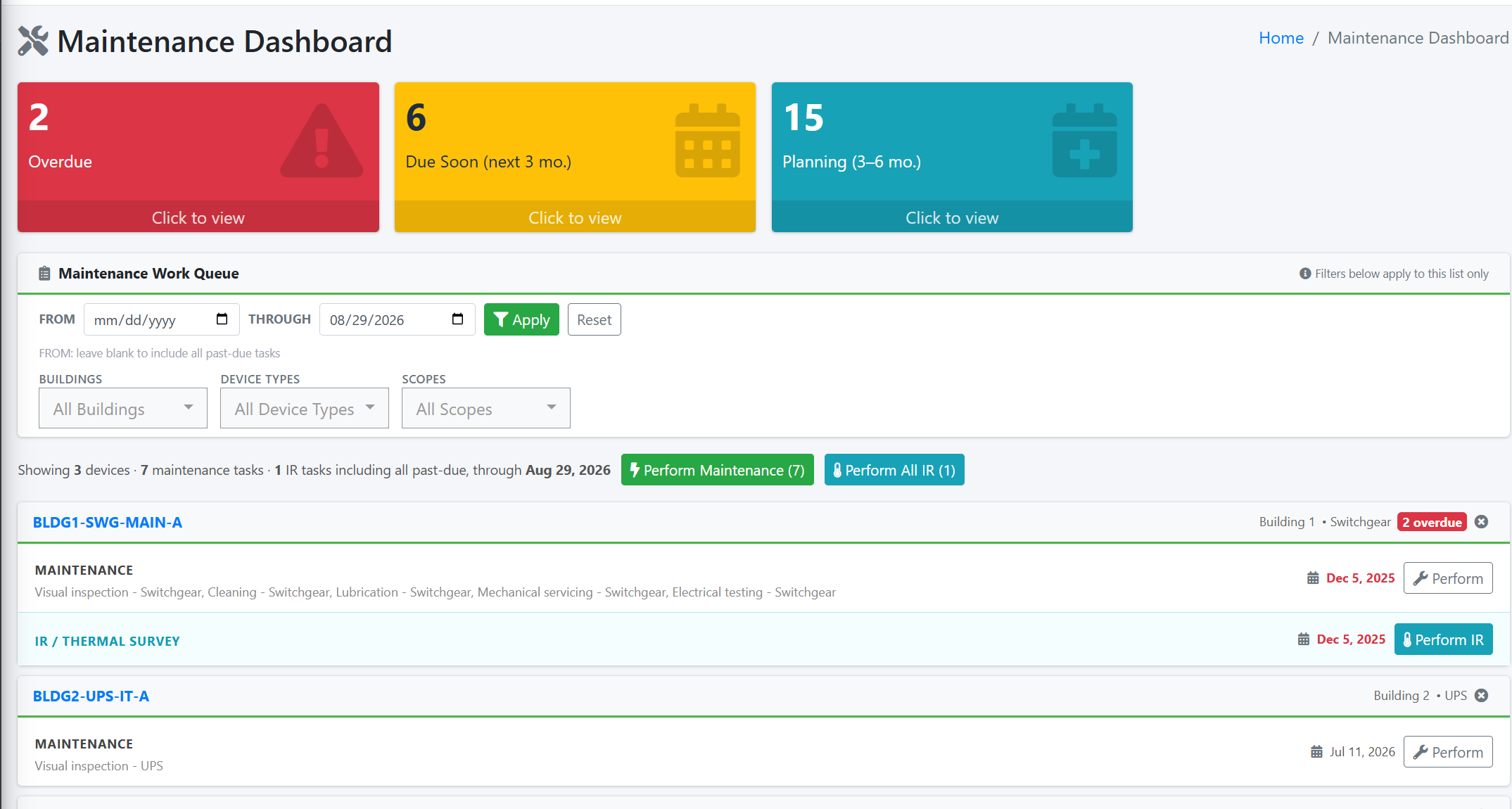
Gimba handles this automatically. When your technician records a condition rating, the system calculates the correct next maintenance date using the NFPA 70B intervals for that device type. No manual interval lookups. No wrong schedules.
When a device condition changes, the schedule updates. The dashboard shows what’s due, what’s overdue, and where your highest-risk assets are.
FROM INVENTORY TO EMP
Your Asset Data Becomes Your Compliance Program.
The asset inventory isn’t just a database. It’s the source material for your Electrical Maintenance Program. When your inventory is current in Gimba, your EMP is current too.
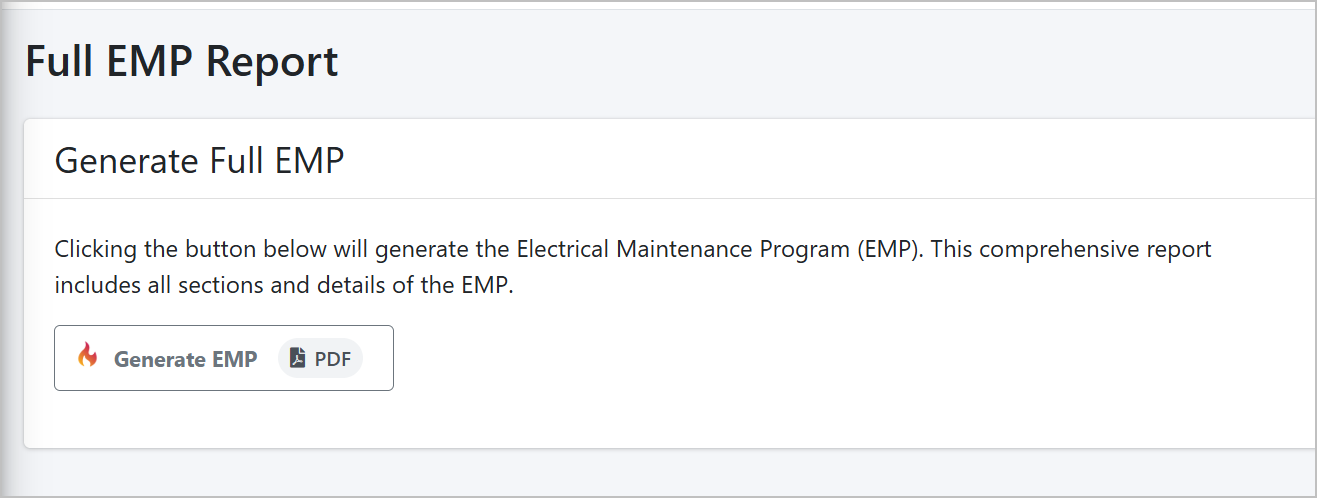
One click generates a complete, formatted EMP document pulling all asset records, condition ratings, maintenance intervals, and inspection history. Ready to hand to an auditor, insurer, or AHJ the same day.
Not days. Not a consultant. One click.
Equipment Gimba Tracks for NFPA 70B Compliance
✓ Transformers (dry-type and liquid-filled)
✓ Switchgear and metal-clad switchgear
✓ Circuit breakers and molded-case breakers
✓ Motor control centers
✓ Panelboards and load centers
✓ UPS systems and battery strings
✓ Transfer switches (static and automatic)
✓ Emergency generators
✓ Protective relays
✓ Power distribution units
✓ Bus ducts and busways
✓ Engines and rotating equipment
Build Your Asset Inventory Today
Most clients have a complete, NFPA 70B-compliant asset inventory in place the same day they onboard. See how fast it works for your facility type.
Frequently Asked Questions
What is electrical asset tracking under NFPA 70B?
NFPA 70B requires a complete, documented inventory of all electrical equipment in your facility. Asset tracking means recording each device – its type, location, nameplate data, condition rating, and maintenance history – in a system tied directly to your maintenance program.
Does Gimba import existing equipment data?
Yes. Gimba imports from spreadsheets, SKM and ETAP electrical study files, and PDF one-line diagrams. If you have existing data in any format, we can work with it. Starting from scratch is also straightforward with the nameplate photo capture workflow.
How does asset tracking connect to EMP generation?
Every asset in Gimba feeds directly into your Electrical Maintenance Program. When you generate your EMP, it pulls the current asset inventory, condition ratings, maintenance intervals, and inspection history automatically. No manual assembly required.
Can I track assets across multiple facilities?
Yes. Gimba supports multi-facility organizations with a geo-mapped dashboard showing all sites from a single login. Each facility has its own inventory and program. Flat-rate pricing scales by facility count, not headcount.
How is Gimba different from a generic CMMS for asset tracking?
A generic CMMS tracks assets and work orders but wasn’t built for NFPA 70B’s specific requirements. Gimba is purpose-built around the standard – condition ratings feed directly into NFPA 70B-specified intervals by device type, and the asset inventory generates a compliant EMP with one click. No customization required.
Related reading: NFPA 70B Overview | What an EMP Requires | Maintenance Intervals | Condition Assessment Guide | NFPA 70B Software | Schedule a Demo
